The FIFA World Cup ended on July 19 with Spain defeating Argentina, closing the largest tournament in the competition’s history: 48 teams, 104 matches, three host countries and a record 6.8 million spectators.
For marketers, however, the most important result was never on the scoreboard. The tournament ran for six weeks, and across that span it became a rolling study of how people gather, watch and identify. The trophy was decided in a single afternoon. The lessons for brands accumulated the entire time.
Over six weeks, the tournament offered a vivid picture of how culture, identity and media behavior are changing across North America. Fans did not participate as one broad “soccer audience.” They arrived through national heritage, local community, family traditions, creators, fashion, food, language and entertainment.
The post-tournament opportunity, therefore, is not to extend World Cup advertising by a few more weeks. The real work is quieter. It involves converting a burst of temporary attention into a deeper understanding of the audiences, relationships and behaviors the tournament brought to the surface, then acting on what that understanding reveals long after the crowds have gone home.
The World Cup Revealed Many Audiences, Not One Fan Base
One of the clearest lessons was the inadequacy of a single “World Cup fan” persona. Nielsen described the tournament audience as dozens of audiences appearing simultaneously, shaped by different communities, generations, passion points and media habits.
A Mexican American supporter in Los Angeles, a Nigerian American family in Houston, a Colombian immigrant in New Jersey and an English-speaking Gen Z fan discovering soccer through creators may have watched the same match, but their emotional entry points were not interchangeable.
For some, the tournament represented national pride. For others, it offered a connection to family heritage, a reason to gather socially or simply the chance to take part in a major cultural moment. Many consumers carried layered allegiances of their own, supporting the United States or Canada while holding on to an emotional attachment to a parent’s or grandparent’s country. Those loyalties are not contradictions to be resolved. They are the texture of how modern audiences actually experience a global event.
This matters because demographic targeting alone cannot explain what people experienced. Race, ethnicity and language remain important, but brands also need to understand heritage affiliation, immigration generation, level of soccer knowledge, local identity and the role the sport plays within the household.
The post-tournament priority: Replace broad multicultural audience definitions with richer cultural-fandom profiles. The goal is to identify not only who watched, but what the tournament meant to them and which elements of that connection are likely to continue once the matches stop.
Cultural Relevance Was Created Locally
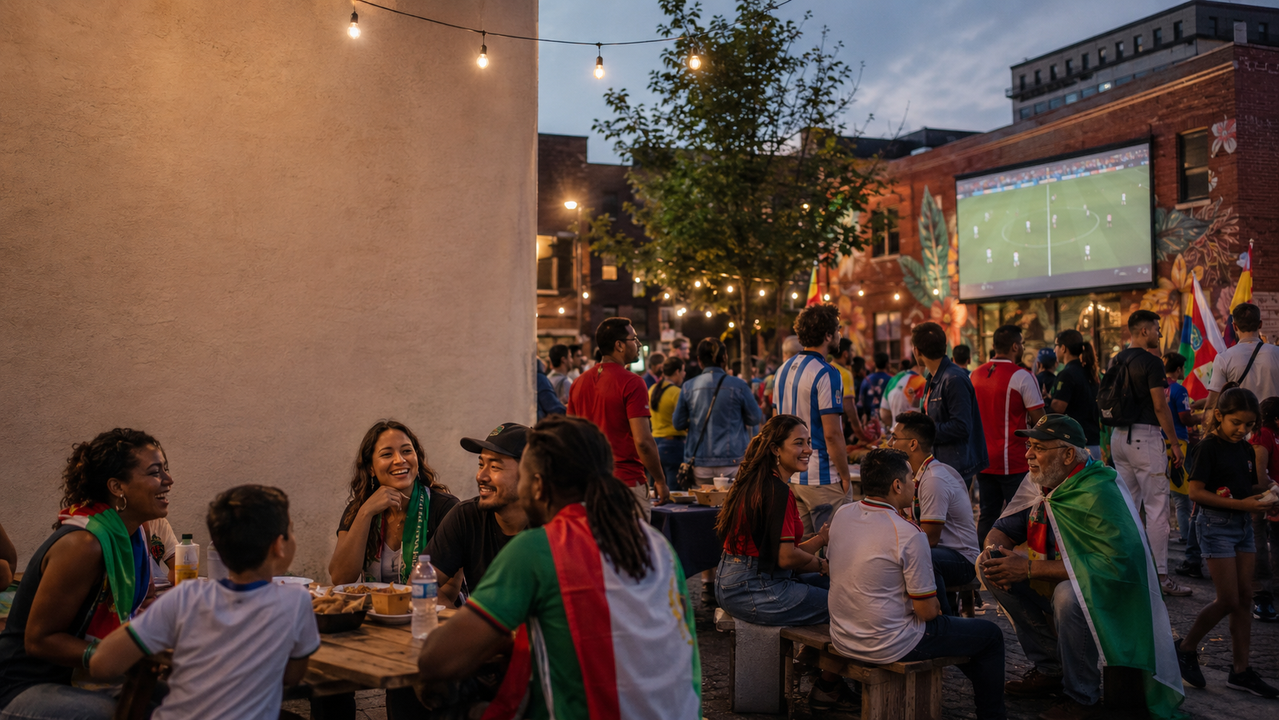
Although the tournament was global, much of its most meaningful energy was local. Fans experienced it through neighborhood restaurants, community watch parties, host-city festivals, ethnic media, cultural organizations and creator-led gatherings.
FIFA reported that more than 5.5 million people had attended its official fan festivals before the knockout rounds were complete. At the same time, Bank of America found that host-city spending rose during the tournament, with particularly strong activity in categories such as food services.
The implications reach well beyond event economics. Those numbers describe more than spending and attendance. They describe where people chose to be, and who they chose to be there with. The tournament made the difference plain: a national campaign can generate awareness, yet community participation is what creates emotional relevance. One buys attention. The other earns belonging.
The strongest local experiences were not simply smaller versions of a national activation. They reflected the cultures, teams, languages and traditions present in each market. Soccer culture in Miami differs from soccer culture in Los Angeles, Houston, Kansas City or New York/New Jersey.
The post-tournament priority: Maintain relationships with the local creators, restaurants, community groups and cultural organizations that made the tournament feel authentic in the first place. Those partners should not quietly disappear from brand plans the moment tournament budgets close. Continuity is what turns a sponsorship into a presence.
Spanish-Language Engagement Demonstrated Crossover Value
Spanish-language coverage was not relevant only to Spanish-dominant Hispanic audiences. Telemundo reported that millions of English-speaking viewers also chose to experience the tournament in Spanish, illustrating how language, cultural energy and sports-viewing preference can cross conventional audience boundaries.
This is an important distinction. Multicultural media should not be viewed exclusively as a narrow mechanism for reaching a predefined ethnic segment. It can offer storytelling styles, personalities and cultural experiences that appeal beyond the audience historically associated with the channel.
The lesson here is not simply to produce more Spanish-language advertising and call the work done. Language is one component of cultural relevance, an important one, yet it cannot substitute for an understanding of nationality, generation, humor, identity or football tradition. A translated tagline is not the same thing as a translated worldview. Audiences can tell the difference almost instantly.
The post-tournament priority: Examine where multicultural media delivered crossover engagement, then study what made it travel. The task for brands is to test how culturally specific content can attract wider audiences without diluting the very context that made it compelling to begin with.
Fans Valued Participation More Than Sponsorship Visibility
The tournament reinforced a broader shift already underway in sports marketing. Visibility alone is not engagement. A logo on a banner reaches the eye, yet it rarely reaches the conversation, and it is the conversation that increasingly determines whether a brand belongs in the moment at all.
Analysis of World Cup campaigns found that brands benefited when they connected with live moments, creators and fan conversations rather than relying solely on official sponsorship status or logo exposure.
Consumers participated through reactions, memes, match predictions, fashion, music, food, gaming and social commentary. For many casual fans, and younger audiences in particular, the social life surrounding a match mattered as much as the action on the pitch. The game supplied the occasion. The audience supplied the meaning, remixing it into something they could share, argue over and make their own.
This presents a challenge for brands that treated the World Cup as a six-week media buy. A sponsorship may produce reach, but it does not automatically produce cultural credibility or an ongoing audience relationship.
The brands best positioned after the tournament are those that collected more than impressions. They learned which communities participated, which creators drove meaningful interaction, which rituals attracted casual audiences and what kinds of content people chose to share.
The post-tournament priority: Evaluate engagement quality, not merely campaign exposure. The distinction worth drawing is between people who simply saw an activation and those who participated, contributed, returned or came away with a stronger association to the brand. One number flatters a report. The other predicts a relationship.
The Tournament Expanded the Meaning of Soccer Culture
The World Cup was never consumed purely as a sporting competition. It intersected with entertainment, celebrity, music, travel, fashion and food, spilling well past the ninety minutes on the clock. For a large share of the audience, the match was the anchor rather than the whole experience. What surrounded it, from the pre-game meal to the post-match playlist, carried nearly as much cultural weight.
This breadth widened participation, yet it also introduced tension. The final’s large-scale halftime entertainment drew criticism in some quarters for feeling disconnected from the organic energy and global character of the fans themselves. Spectacle was plentiful. The sense that it belonged to the people in the stadium was harder to find.
The critique offers a useful lesson: adding globally recognizable talent does not automatically create a culturally coherent experience. Audiences notice when diversity is assembled cosmetically rather than grounded in a credible idea or community context.
Brands should be particularly cautious about turning multicultural engagement into a collection of flags, celebrities and translated taglines. Consumers increasingly distinguish between campaigns that recognize their lived identities and those that use culture as event decoration.
The post-tournament priority: Conduct a cultural resonance review while the tournament is still fresh. The exercise should establish which activations felt authentic, which felt generic and whether the brand gave audiences a meaningful role or merely represented them in the creative. The honest answer is often uncomfortable. It is also the most useful thing a brand can learn.
The Greatest Opportunity Lies in What Happens Next
The tournament gave many consumers a new reason to engage with soccer. The central question is whether brands will continue serving them now that the biggest matches are over.
The next phase of engagement could include domestic leagues, women’s soccer, youth programs, international club competitions, gaming, player-led content and community participation. It could also include adjacent cultural interests that became visible during the tournament, from food and travel to music and fashion.
Brands should resist the assumption that every new viewer will convert into a year-round soccer supporter. Some certainly will, folding the sport into their weekly routine. Others will remain cultural-event fans who resurface for international tournaments or community gatherings and drift away in between. Both groups hold real value. Each one, though, calls for a distinctly different engagement strategy, and treating them as interchangeable is the fastest way to lose both.
The key is to understand what people actually want to retain from the experience, rather than what a brand would prefer they retain. Those are not always the same thing. Listening for the difference is where the next phase of the work begins.
Five Priorities for Post-World Cup Brand Engagement
1. Identify Who Moved Closer to the Brand
Compare audience perceptions before and after the tournament, side by side. The aim is to determine which cultural and demographic groups showed increased awareness, relevance, trust or consideration, and, just as important, to understand why the shift happened.
2. Build an Audience-Retention Strategy
Segment participants by future potential: committed soccer followers, newly interested fans, heritage-team supporters, social participants and event-only viewers. Develop different continuation plans rather than sending everyone the same follow-up content.
3. Continue Community Investment
Sustain a chosen set of relationships with local leagues, youth organizations, cultural institutions and community creators. Long-term presence tends to be remembered far more warmly than a brand that arrived for six weeks and then vanished. Communities keep score of who stays.
4. Turn Creators Into Ongoing Collaborators
Identify which creators generated trust, participation and genuine cultural interpretation, not simply reach. The strongest of those partners deserve a role beyond a single campaign, brought into broader brand storytelling, product development and consumer-insight work where their judgment can compound over time.
5. Research the Cultural Aftereffects
Study how the tournament influenced identity, family rituals, media preferences, purchase behavior and perceptions of participating brands. Traditional campaign metrics will not fully capture these shifts.
Sparkle Insights’ Point of View
World Cup 2026 did not create a single multicultural marketing opportunity. It revealed an ecosystem of overlapping identities, communities and cultural entry points.
The brands that benefit most in the months ahead will not be the ones that simply keep recycling soccer imagery. The advantage belongs to those that treat the experience as raw material, using it to build a more sophisticated understanding of who their audiences really are and what moved them. That understanding, not the imagery, is the asset worth keeping.
That means moving:
- From demographic segments to cultural motivations
- From sponsorship exposure to meaningful participation
- From national campaigns to local community relevance
- From translated content to culturally grounded storytelling
- From a temporary event strategy to an ongoing relationship
The final whistle should mark the beginning of the learning phase, not the end of the campaign. What a brand does in the quiet weeks that follow will say far more about it than anything that aired during the tournament itself.