For decades, marketers have focused on a familiar question: How do we persuade consumers to choose our brand?
But increasingly, a more fundamental question comes first:
How does a brand get into the consumer’s consideration set at all?
The answer used to be relatively straightforward. Advertising built awareness. Search helped consumers compare options. Retail shelves created visibility. Friends, family, reviews, and media added influence along the way.
Today, that system is being rewritten.
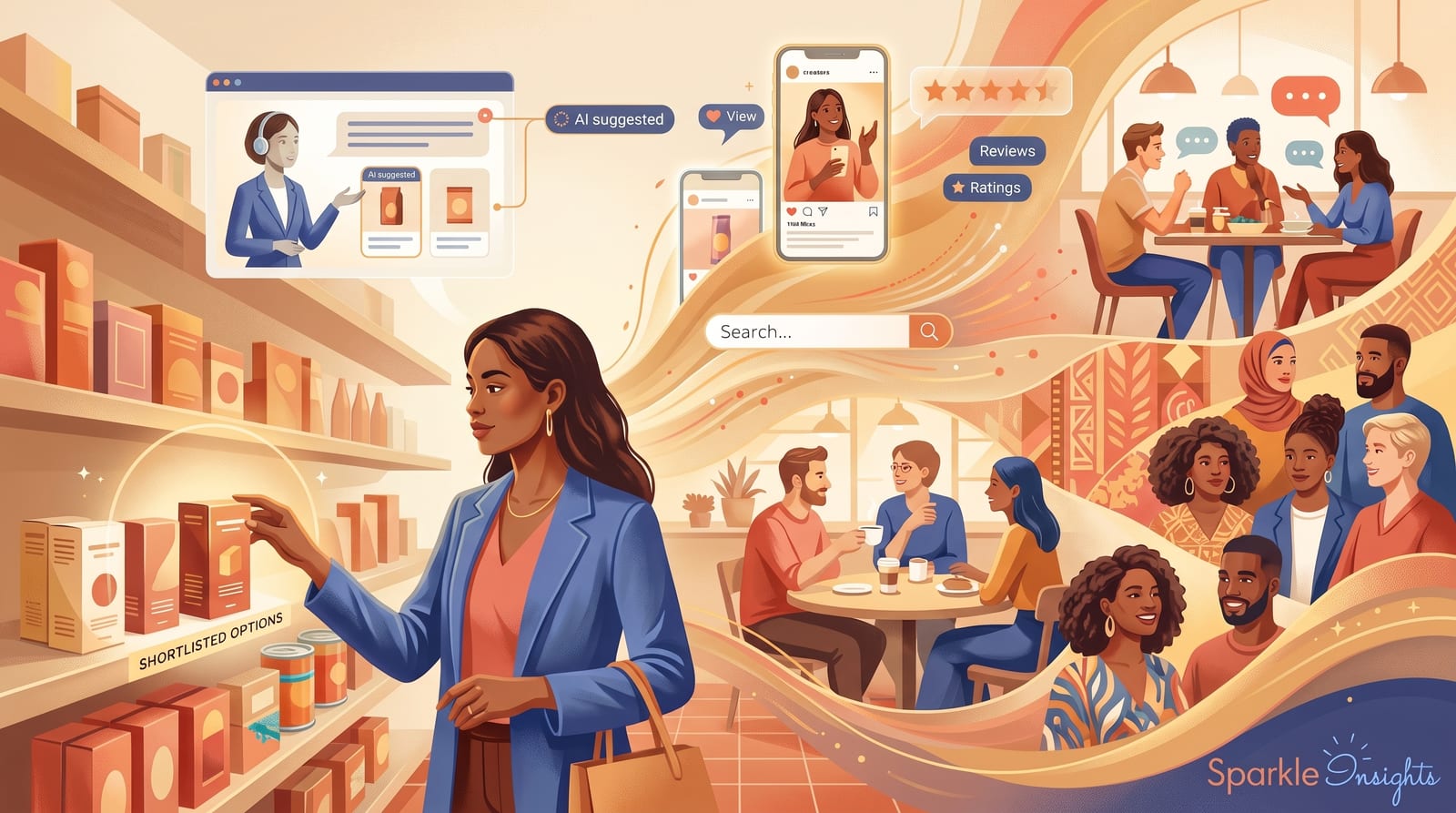
A consumer might first hear about a product from a creator, ask an AI assistant for recommendations, see a culturally resonant conversation on TikTok, check Reddit or reviews for validation, and then purchase through a retailer or social platform—all without ever visiting the brand’s homepage or seeing a traditional ad.
Before a brand has the opportunity to persuade, an increasingly complex network of algorithms, creators, communities, and cultural signals may already have determined whether the brand is visible.
We call this the Invisible Consideration Set: the largely unseen process through which brands are included, excluded, elevated, or reframed before consumers consciously begin making a choice.
Understanding that system may become one of the most important challenges for marketers and insights leaders in the next several years.
The consideration set is being built before the consumer starts “shopping”
Traditional purchase-funnel models generally assume that consumers move from awareness to consideration to evaluation and, eventually, purchase.
That sequence still has value. But it increasingly understates what happens upstream.
Imagine someone looking for a new skincare product.
They might ask an AI assistant, “What are the best moisturizers for sensitive skin?” The AI provides five brands.
Immediately, dozens—or hundreds—of other possible brands have effectively disappeared.
The consumer may then watch videos from creators discussing two of those products. One feels overhyped. Another appears repeatedly in conversations among people who share the consumer’s skin concerns or cultural background.
They ask a friend. They check reviews. They search TikTok. They notice one product being used by creators whose routines and aesthetics feel familiar.
By the time they reach a retailer, the consumer may feel as though they made an independent choice.
But much of the choice architecture was built earlier.
The real competition did not begin at the shelf.
It began with who and what defined the shortlist.
AI is becoming a new gatekeeper of discovery
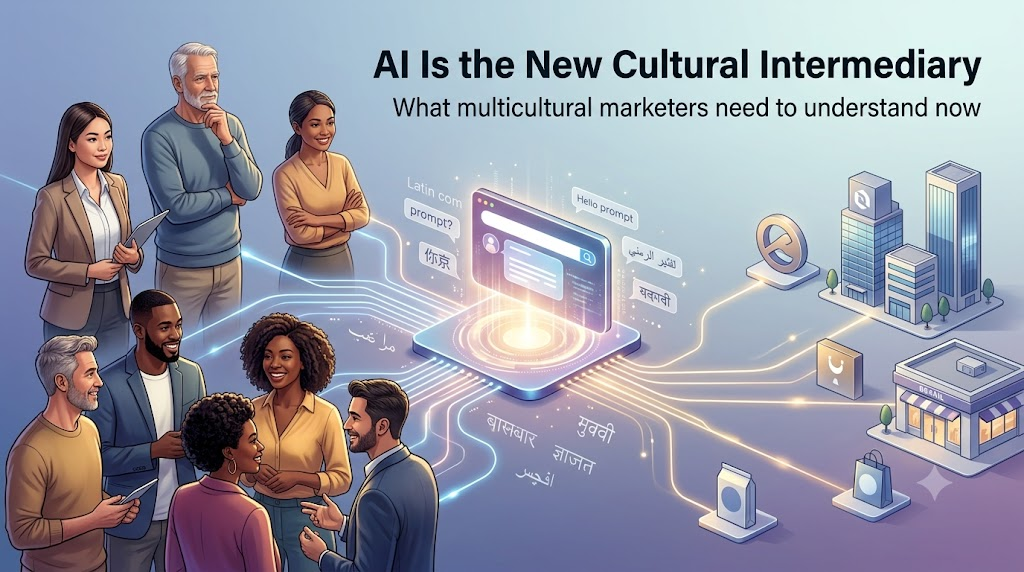
Generative AI introduces a fundamentally different type of intermediary into the purchase journey.
Traditional search typically presents consumers with a relatively broad set of links and asks them to evaluate the options themselves.
AI increasingly performs part of that evaluation on their behalf.
A consumer can ask:
- What are the best running shoes for someone with knee pain?
- Which credit card is best for international travel?
- What Korean skincare brands are good for dry skin?
- What are affordable alternatives to a luxury handbag?
- Which streaming service has the best shows for families?
Instead of receiving hundreds of search results, the consumer receives a synthesized answer.
That is enormously convenient.
It also means the AI system is making consequential decisions about which brands are visible enough to mention.
The marketing implications extend beyond traditional SEO.
Brands will increasingly need to understand questions such as:
What does AI believe our brand is known for?
Which competitors does it associate us with?
Which sources appear to shape those associations?
Under what consumer needs or occasions does our brand appear—or disappear?
And perhaps most importantly:
Does the way AI describes our brand match how consumers actually experience it?
This creates a new research territory somewhere between brand strategy, cultural analysis, consumer insights, and answer-engine visibility.
Simply tracking whether a brand appears in AI responses will not be enough.
Brands will need to understand the meaning being constructed around them.
Creators increasingly influence what AI—and consumers—learn about categories
Creators add another layer to the Invisible Consideration Set.
For years, creator marketing was often treated primarily as a media channel: identify influencers, negotiate content, track reach, measure engagement.
That view is becoming outdated.
Creators increasingly function as product reviewers, trend interpreters, category educators, cultural translators, entertainment channels, and trusted recommendation engines.
Their influence may now operate in two directions.
First, creators directly influence consumers.
A person watching dozens of skincare videos, sneaker reviews, restaurant recommendations, or travel itineraries is absorbing more than product information. They are learning what matters in the category: which attributes signal quality, which brands feel culturally relevant, what language to use, and what is considered worth buying.
Second, creator content may also become part of the wider information ecosystem through which AI systems understand categories and brands.
That introduces a fascinating new possibility.
A creator does not necessarily need to directly persuade an individual consumer to shape demand.
Their content may contribute to a broader narrative that eventually influences search results, AI summaries, social discourse, or the recommendations of other creators.
In other words, creator influence may become increasingly systemic, not just interpersonal.
For marketers, that means the most valuable creator may not always be the person with the biggest audience.
It may be the person whose ideas, language, expertise, or cultural authority travel furthest through the information ecosystem.
Culture determines which recommendations feel relevant
Algorithms and creators may determine what appears in front of a consumer.
Culture often determines whether it feels meaningful.
This is where many conventional models of personalization remain incomplete.
Consumers do not evaluate recommendations only through rational product attributes. They interpret brands through identity, community, memory, aspiration, family, language, aesthetics, and cultural context.
A food brand, for example, may hold entirely different meaning for someone who encountered it as part of a family tradition than for someone who discovered it as a social-media trend.
A beauty product may be perceived differently depending on whether consumers believe the brand understands their skin tone, hair texture, beauty traditions, or cultural references.
A financial-services brand may be evaluated differently in households where financial decisions are individual versus intergenerational.
The same brand can therefore occupy very different consideration sets among consumers who appear demographically similar on paper.
That is why multicultural strategy cannot simply be layered onto an existing marketing plan after the “mainstream” strategy has been decided.
Culture influences the consideration system itself.
It shapes whom consumers trust.
It shapes which creators feel credible.
It shapes what counts as expertise.
It shapes which benefits matter.
It shapes what feels aspirational versus inauthentic.
And increasingly, it may influence how consumers phrase the questions they ask AI systems in the first place.
The household is becoming another recommendation network
The Invisible Consideration Set is particularly visible among younger consumers.
Gen Z and Gen Alpha do not make decisions in isolation from their families, even as social platforms and algorithms play major roles in discovery.
Influence often moves in multiple directions.
A teen may introduce a parent to a beauty brand discovered on TikTok.
A parent may determine whether that brand feels trustworthy enough to purchase.
A younger family member may introduce a restaurant, streaming show, technology platform, or fashion trend that becomes adopted across the household.
Meanwhile, parents pass along their own preferences, habits, cultural references, and brand associations.
Instead of thinking about youth influence as a simple “pester power” model, brands may need to understand households as interconnected recommendation systems.
This creates new research opportunities.
Rather than interviewing parents and teens separately, researchers can examine decision-making through paired interviews, shared shopping exercises, digital ethnography, or household decision journeys.
The question becomes less, “Who is the decision-maker?” and more:
How does influence move through the household?
Trust and influence are no longer the same thing
One of the most important implications of this changing ecosystem is that consumers do not need to fully trust a source for that source to influence them.
A shopper may distrust AI recommendations but still use AI to build a shortlist.
They may be skeptical of influencers but still learn about a new product through creator content.
They may distrust advertising but later purchase a brand whose awareness was originally created by advertising.
Influence can happen before conscious trust is established.
This distinction matters.
Traditional research often asks consumers which sources they trust most.
That remains useful, but it captures only part of the picture.
Brands increasingly need to understand:
- What introduces an option?
- What makes it feel relevant?
- What legitimizes it?
- What removes it from consideration?
- What ultimately gives the consumer permission to choose it?
Those may be five different sources.
AI may create discovery.
A creator may create desirability.
Culture may create relevance.
Reviews may provide validation.
A family member may provide permission.
The consumer experiences one decision.
Behind it sits an ecosystem.
What this means for brand strategy
The rise of the Invisible Consideration Set changes the strategic challenge for brands.
It is no longer enough to optimize communications at individual touchpoints.
Brands need to understand the system that determines visibility before those touchpoints occur.
That suggests several new priorities.
1. Measure inclusion, not just awareness
Traditional awareness measures should increasingly be complemented by questions about whether a brand appears in AI recommendations, creator conversations, cultural communities, and relevant consumer shortlists.
2. Map the sources that construct category meaning
Brands should identify not only where consumers receive information, but who defines the language, expectations, and norms of the category.
3. Separate discovery from trust
The source that introduces a brand may not be the source that closes the sale. Research should examine each role independently.
4. Study culture upstream
Cultural research should inform product, positioning, innovation, media, and experience strategy—not simply campaign adaptation.
5. Treat AI visibility as a brand-insights problem
The goal should not merely be to manipulate AI answers. Brands need to understand whether the information ecosystems surrounding them accurately reflect the positioning they want to own.
The next research question
Marketing has spent decades learning how to persuade consumers once a brand enters consideration.
The next frontier may be understanding what determines entry itself.
AI is narrowing options.
Creators are shaping category narratives.
Culture is determining relevance.
Families and communities are validating choices.
Commerce platforms are collapsing discovery and transaction.
And consumers are moving through all of these systems fluidly, often without recognizing how much their consideration set has already been shaped.
For brands, the key strategic question is therefore changing.
It is no longer only:
How do we convince consumers to choose us?
It is also:
Who—or what—is deciding whether consumers see us as an option in the first place?
The brands that can answer that question will have a significant advantage.
Because in an environment of infinite choice, the greatest competitive advantage may simply be making it into the shortlist.
Sparkle Insights Perspective
At Sparkle Insights, we believe understanding the next consumer journey requires looking beyond traditional funnels and demographic segments.
The future of consideration sits at the intersection of human behavior, cultural context, creator influence, AI-mediated discovery, and commerce.
For research and strategy leaders, that means studying not simply what consumers choose, but the invisible systems that shape which choices ever become possible.