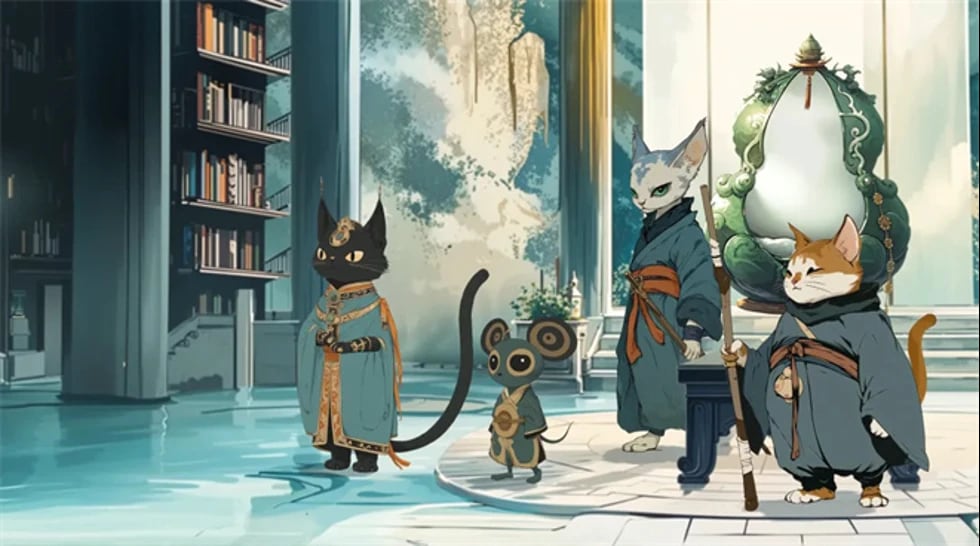
A fantasy drama about a mouse trying to save his village became an unlikely launchpad for fruit wine. In China, beverage brand if commissioned a spinoff of the AI manju series You Shan Ling and put the characters on its packaging. An account of the campaign in Adquan reported more than 30,000 orders and over 2 million yuan in gross merchandise value for the co-branded product in its first two weeks. Those are reported launch figures, not proof that the drama caused the sales. However, the collaboration shows why brands are paying attention: a fictional world can give a product a role that continues beyond a single ad.
AI manju are short serialized video dramas that use generative AI for substantial visual production. Often watched vertically on a phone, they sit between motion comics, animation and short-form drama. China's surge in titles and viewing has made the format a test of how cheaply stories can be produced, how audiences discover them and whether recurring characters can carry commercial value. For U.S. brands, the useful question is which parts of that model could create a durable audience relationship.
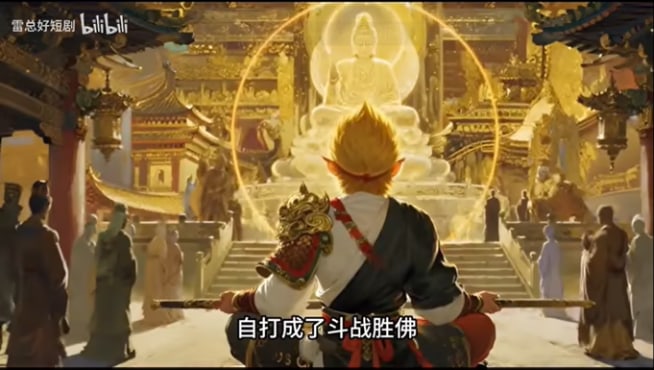
Another title shows the scale of the phenomenon. In Zhan Xian Tai Xia, Wo Zhen Jing Le Zhu Shen (斩仙台下,我震惊了诸神!; “Beneath the Immortal-Slaying Platform, I Shocked the Gods”), a young man enters a school of supernatural training and challenges powerful opponents. Its producer, Hefei Dixun, told People's Daily Overseas in March 2026 that the team adapted an existing story with people involved in scripting and production. The paper reported more than one billion plays. DataEye's 2025 Manju Annual Report described an initial paid release followed by availability through Hongguo's short-drama ecosystem, with reported cumulative income of 1.4 million yuan.
Neither a campaign's gross sales nor a series' plays establish its profit or incremental impact. Plays are not unique viewers, and available market figures cover different combinations of AI and non-AI work, releases and platform audiences. The opportunity is real enough to investigate; its economics need to be read with those distinctions in mind.
The Scale of the Phenomenon
DataEye's 2025 report estimates more than 70 billion manju plays across the Chinese market. The figures below show how quickly supply and viewing activity grew, while measuring different points in the audience journey.
| Measure and period | Reported result | How to read it |
|---|---|---|
| Monthly new manju in 2025 — DataEye | 1,049 in May; 13,749 in September. | Monitored supply growth. |
| All-market manju plays in 2025 — DataEye | Estimated above 70 billion. | Playback events, including repeat views and episodes. |
| Hongguo Free Manju in December 2025 — DataEye's February summary of QuestMobile | 8.54 million monthly active users. | Audience of the manju category within Hongguo's short-drama ecosystem. |
| Hongguo Free Short Drama in December 2025 — DataEye's February summary of QuestMobile | About 275 million monthly active users. | Audience of the broader short-drama app. |
| Hongguo Free Manju usage in December 2025 — DataEye's March report | Reported 5.3 hours per user for the month. | Monthly time in the app. |
Together, the figures show expanding supply and substantial viewing activity, but they measure different things. Plays count playback events; monthly active users describe an app's audience; platform "heat" is a separate performance measure. App audiences overlap and should not be added together. For a sponsor, completed episodes, returning viewers and revenue provide a closer connection between that activity and commercial goals.
The type of content gaining traction matters too. In DataEye's September report on August 2026 AI rankings, Douyin's top 100 included 62 3D manju, 37 photoreal AI dramas and one 2D title. The 3D titles accounted for 68% of the list's monthly play increase, and Hongguo's corresponding top 100 consisted entirely of 3D manju. This is evidence of prominence within those hit lists, rather than proof that a 3D look causes success or will appeal equally to another audience.
Why Viewers Keep Watching
AI manju entered a market already accustomed to short serialized entertainment. A microdrama advances a conflict, delivers an emotional payoff and leaves something unresolved for the next installment. Generative production gives studios new ways to stage those moments within a familiar storytelling rhythm.
CSM Media Research and its partners described that viewing habit in findings published in August 2026 from a January survey of Chinese adult internet users. They reported that 70.2% had watched microdramas by the end of 2025. Among viewers, 67.2% selected before-bed viewing, and nearly four in five preferred three-to-ten-minute episodes. More than 75% endorsed individual attributes such as fast plots, concentrated emotional payoffs and vivid storytelling. These are findings about microdramas broadly, but they help explain why brief, emotionally direct serials have an established place in daily routines.
Discovery often begins casually: 37% cited trending recommendations, and roughly three in ten watched what they encountered while scrolling. Familiar premises help communicate the stakes before viewers know the world. Rebirth offers a second chance; a humiliated protagonist's hidden advantage promises a reversal. Fantasy settings, elaborate costumes and supernatural events can make those hooks visually striking without requiring an interest in AI itself.
The next challenge is turning a casual start into continued viewing, and the payment model affects that decision. Viewers may watch ads, buy episode access or subscribe. Studios may earn licensing payments, advertising shares or platform rewards. Free access makes a title easier to try, while placing more weight on repeat use and advertising yield. The cost of attracting viewers still has to be recovered somewhere in that arrangement.
Platform incentives can also shape which projects get made. DataEye's September 23, 2026 report describes Hongguo's planned October rules as requiring new, completed AI works of at least 60 minutes, original or authorized material, and safety and technical review. Awards depend on peak platform heat, making individual work performance important to eligibility and promotion on the platform. Release length, completion and platform requirements can therefore become production decisions rather than considerations made after a series is finished.
At the same time, more titles compete for discovery. DataEye's annual report says monitored manju titles with paid promotion rose from 234 in January 2025 to 17,944 in December, while ad creatives increased from 27,000 to 1.623 million. Producers can test covers and openings and put more spending behind promising titles, but cheaper production also creates a more crowded field. Formulaic work is a risk: more than 35% of respondents in the CSM survey identified problems such as repetitive content or exaggerated stories detached from reality.
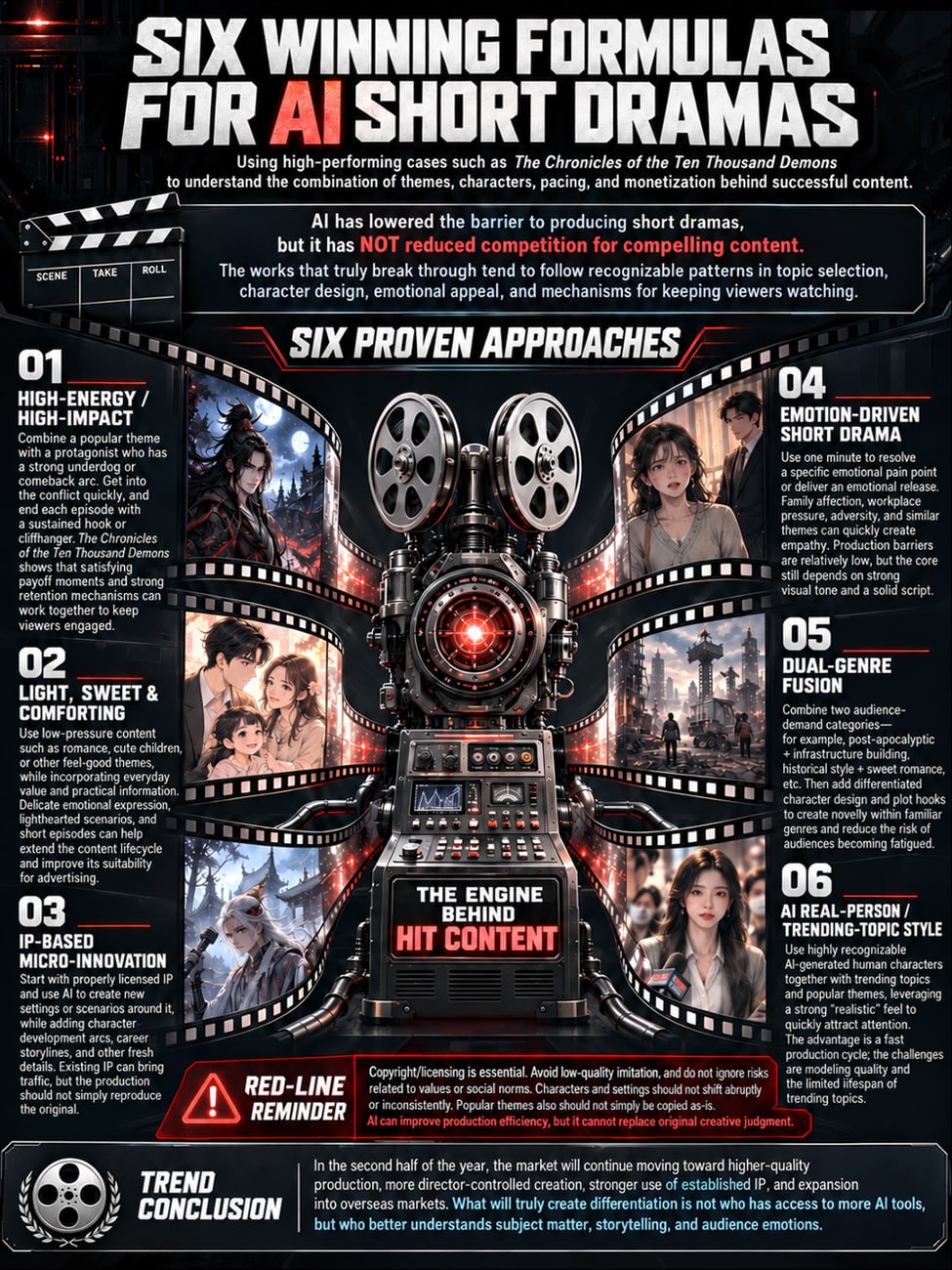
Recurring characters offer one way to build beyond a single hook. DataEye identified 23 series IPs in Hongguo's August rankings; one, Wan Yao Tu Lu Zhuan (万妖图录传; “Chronicle of the Ten Thousand Demons”), was being developed for live action, according to a September Short Drama Insider report republished by PEdaily. An illustrated adaptation can reveal which characters and cliffhangers resonate before a larger production is attempted. It cannot guarantee that audiences will accept a new version, especially when a human performer replaces a familiar illustrated character.
For brands, these habits support looking beyond a large play count to the audience a series retains. DataEye's 2025 manju test sample placed 31.81% at ages 31–40, 24.04% at 24–30 and 23.07% at 18–23. People's Daily Overseas separately reported a 38% overlap between Kuaishou's paying manju and paying short-drama audiences. Those findings offer starting points for investigation, not a substitute for a title's own audience profile. A favorite, subscription or next-season reservation signals a different relationship from a passing feed view.

The Economic Impact of Cheaper Production
Lower visual production costs let studios attempt more stories, but they do not automatically make production profitable. A known novel brings readers who may try an adaptation; an original has to build interest. Both need a budget for writing, rights, rejected outputs, editing and revisions, followed by the cost of reaching viewers. The price of generating a clip is therefore a poor proxy for the economics of the finished work.
The market's rapid expansion has also made commercial success harder to achieve. A September 21, 2026 report by Jin Cuodao, published on 36Kr, described one practitioner who launched 47 AI dramas in the first half of the year, investing nearly 300,000 yuan across computing, copyright, labor and promotion. Only three titles reached 10 million views, and the highest revenue-sharing return from a single title was less than 20,000 yuan. The practitioner reported a net loss of more than 100,000 yuan over six months. This account illustrates why lower production costs do not necessarily translate into positive returns.
The change was not only about price. The same report described a shift from guaranteed production fees toward revenue sharing, meaning studios increasingly had to depend on a title's performance after release. Among more than 221,900 native AI short dramas launched on Douyin in the first half of 2026, only 1,055 exceeded 100 million plays; the report estimated that fewer than 1.3% reached a 50-million-play break-even threshold. These are industry estimates, not audited profitability data, but they illustrate the gap between production capacity and commercial success.
For a brand commissioning work, the relevant questions are therefore not simply how cheaply an episode can be generated. The studio still needs to budget for writing, revisions, quality control and distribution, while the commercial model determines who bears the risk if the title does not attract enough viewers. AI lowers the cost of making content; it does not eliminate the cost or uncertainty of finding an audience.
What Makes AI Manju Different
Starting with a novel chapter, script and visual references, a team can generate characters, environments and shots, then assemble them into episodes. People decide how the story unfolds and which material makes it coherent.
A three-dimensional look does not necessarily mean conventional 3D production. A generated hero may have no reusable digital model an animator can reposition; changing a gesture may require generating and selecting new shots. Continuity becomes a central part of the work.
An AI manju team can also create an immortal, a mecha suit or an impossible landscape without filming actors on a set. Work shifts toward visual design, generation, correction and editing. Voices may be human or synthetic, and some productions use human performances as references.
The terms below distinguish the source material from the video formats that can result from it.
| Format | What it means |
|---|---|
| Web Novel | Serialized prose that may supply a story for adaptation. |
| Webtoon | A digital comic, often designed for scrolling. |
| Manju | Short serialized visual drama, from manhua duanju, or "comic short drama." It predates generative AI. |
| AI Manju | Manju using generative AI for substantial visual production. |
| Photoreal AI Drama | Synthetic performances resembling filmed actors; an adjacent format sometimes grouped with AI manju. |
Whatever the format, the story must earn attention quickly. A reader may give a novel several chapters; someone scrolling through a feed may decide within seconds. Visual design establishes the world, while the script gives the viewer a reason to stay.
From a Story to a Finished Series
Production begins with a story and a decision about who can adapt it. Publishers can supply both source material and knowledge of its readership, while studios, platforms and agencies help turn that material into a series. Fanqie Novel, a Chinese serialized-fiction platform, promoted short-drama and manju adaptation opportunities in its May and September 2026 writer announcements. China Literature brings a rights catalog and production support; according to the March People's Daily Overseas report, more than 100 paying studios used its manju assistant. An existing readership offers a useful starting point, although its interest still has to carry over to video.
Before adapting a property, the producer needs to establish the permitted uses. Fanqie's author-protection guidance and an interview republished by China's intellectual-property administration address unauthorized adaptations. The practical questions begin with which story and characters are covered, who approves changes, and whether the agreement extends to later episodes or spinoffs. An original script is another journey, but a close rewrite of a particular work or a conversion of filmed drama into illustrated imagery still raises questions about the underlying material and performances.
An unfinished source story makes those decisions more consequential. Later chapters of a serialized novel or webcomic may change a character's motives, overturn a relationship or redirect the plot. Producers should agree with the author which chapters the season covers and how subsequent changes will be handled. For a brand, the immediate concern is whether the commissioned season has a coherent ending and whether its integration can survive revisions to the source.
With that foundation in place, adaptation turns prose into actions the viewer can see. Imagine a chapter about a woman discovering she can stop time. Pages of internal monologue might become a thirty-second confrontation, a clock stopping and a crowd freezing around her. The storyboard sets the shots; visual references establish her face, clothing and surroundings so that the next episode resembles the first. The creative work is already substantial before generation begins.
The workflows described by Alibaba Cloud and China Daily connect those scripts and storyboards with character, costume, background and voice references. Teams use image-generation, image-to-video, voice, music and editing tools to produce alternatives, select shots and assemble them with dialogue and sound. The production approach determines how much movement is generated and how much is created through editing or conventional animation.

| AI production approach | What AI generates | What people still do |
|---|---|---|
| Generated images with limited motion | Character and scene images; narration or voices may also be generated. | Adapt the script, select images, create pans and zooms, edit sound and timing. |
| Generated moving scenes | Video shots from prompts, reference images or other inputs, with an illustrated or 3D-like appearance. | Design shots, reject errors, maintain identity and continuity, edit the performance and story. |
| Hybrid production | Selected images or shots within a workflow that may also use conventional animation, compositing or human performance. | Choose where each technique works and make the different elements fit together. |
| Photoreal AI drama | Synthetic scenes resembling camera footage of human actors. | Review performance, likeness permissions and continuity. Some platforms combine this adjacent form with AI manju. |
For the frozen-crowd scene, a team might select a generated still and use an image-to-video model to move the camera through it. If the character's face changes halfway through, the shot needs another attempt, compositing or a different cut. An actor's dialogue gives the editor a performance to work with; synthesized dialogue still needs someone to judge the pauses, emphasis and emotion. AI can assist with scripting, translation and lip synchronization, and agents may coordinate steps, but Alibaba Cloud's September 2026 Manju Workshop documentation places human review throughout script, character and shot development.
The final episode emerges from that review. Editors check continuity, lip movement, sound levels, subtitles and whether the opening and cliffhanger work. China Daily's July 2026 article "Small Teams Summon Big Worlds" describes one compact version of the process: Shenzhen Aizao Technology founder Tang Jiancong said a director adapted the story, two workers generated clips and an editor assembled them. He estimated that the team could finish 120 minutes of 2D drama in about 20 days, with labor and computing below 300 yuan per finished minute, before rights and promotion. The estimate captures both the potential saving and its boundary: generating footage is only part of delivering a series.

How Series Reach Viewers
A finished series needs a journey from discovery to continued viewing. Short-video feeds can introduce a title through an episode or promotional clip, while short-drama platforms provide a place to continue watching. In China, Douyin and Kuaishou can serve both functions, while Douyin can also direct viewers to Hongguo's short-drama platform. Manju is a category within Hongguo's broader short-drama offering, rather than a separate viewing ecosystem. This allows a title discovered through a short-video feed to lead into a broader short-drama viewing environment.
The journey varies by title and platform. A licensed novel might become an AI series, attract attention through a Douyin clip, and then direct viewers to Hongguo to continue watching. Other titles may be discovered and viewed entirely within Douyin or Kuaishou. Mini-programs within WeChat or Douyin provide another path, allowing viewers to watch without installing a separate app. DataEye's February summary of QuestMobile's ecosystem report places these platforms alongside standalone short-drama apps, illustrating the range of journeys through which viewers can discover and watch short-form serialized content.
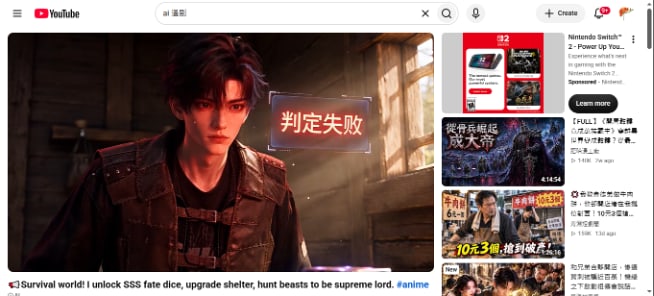
Outside China, YouTube can provide another route for audiences to encounter AI manju. Some series appear on YouTube for international audiences, although availability and licensing can vary, and many uploads are not officially licensed. In this context, YouTube is better understood as an overseas distribution or discovery channel rather than part of the core Chinese short-drama ecosystem described above.
For a producer or sponsor, that distribution path matters because it affects access to promotion, followers, and viewing data. A large audience on one part of the ecosystem does not automatically become an audience for a particular title. Market figures are therefore most useful when read against the specific journey a series takes from discovery to repeat viewing.
Brand Collaborations and Synthetic Endorsement
IF and You Shan Ling
The IF fruit-wine collaboration with You Shan Ling (有山灵; “The Mountains Have Spirits”) shows how a brand can enter an existing fictional world and extend the connection beyond the episode. Adquan's September 2025 article "Looking at the AI Manju Market Through Brand Marketing" describes an August partnership with the original fantasy AI series, produced by With Light and Dust and 1905. The brand, styled "if" in the account, commissioned a custom spinoff alongside co-branded wine, creator videos and an AI interaction accessed from the package.
The campaign aimed to build recognition for fruit wine beyond IF's coconut-water association. You Shan Ling follows a mouse protagonist trying to save his village; 1905's catalog identifies director Pang Jia and a completed 36-episode season. Adquan describes distribution through Douyin, 1905 and Bilibili. The story supplied a setting for the product, while the packaging gave buyers a journey back into that world.
In Adquan's promotional account, five people made the original series over eight months, while the custom spinoff took about one month. The account attributes nearly 19 million impressions and more than 800 creator videos to the campaign, and over 2 million yuan in gross merchandise value and 30,000 orders to the first two weeks of the product launch. These reported results illustrate the campaign's scope. They do not establish incremental sales or profit, which would require costs and a credible comparison; the original season and spinoff also involved different amounts of work.

Fang Taozi and the Contact Lens Controversy
The next case changes the question from how a brand enters a fictional world to what happens when the fictional character becomes its spokesperson. In Sixth Tone's August 12, 2026 article "An AI Actress Sold Contact Lenses. China Isn't Buying It.," Fang Taozi is a photoreal AI character introduced in the June drama The Laid-Off Girl. The story follows a small-town woman pursuing a modeling career and facing workplace pressures. Sixth Tone reported more than 320 million Douyin views for the series and over 470,000 followers for Fang's separate account.
Fans praised Fang's moles and blemishes, while her account carried supposed daily-life and behind-the-scenes posts. This adjacent photoreal format shows how an imperfect appearance and recognizable life can make a synthetic persona appealing. It also creates expectations about what that persona is claiming to experience.
The controversy followed a late-July advertisement for Nutnutlook contact lenses in which Fang claimed all-day comfort from wearing the product. Sixth Tone reported objections to an avatar claiming a physical experience, followed by the ad's removal. A quoted lawyer raised false-advertising concerns, although the report described no regulatory ruling. The practical distinction is between a character participating in a story and claiming personal product experience it cannot have. That boundary becomes especially important when an appealing character develops a life outside the original series.

Distinctive Characters and the Rights to Use Them
A recurring character can become valuable to a brand only if viewers recognize it and the production can reproduce it consistently. Familiar genre styling can establish romance or fantasy quickly, but similar faces and costumes can make properties blur together. Generation errors create the opposite problem: the same character may look different from shot to shot.
Recognition therefore deserves its own test. Can viewers identify the character in a new pose, without a logo and among competing designs? Do they remember its motives and behavior, and later connect it with the brand? Reusable image, video and voice references can help maintain continuity, as Alibaba Cloud's workflow illustrates. The objective is a character whose identity survives changes in setting and format.
The ability to reuse that character also depends on its origins and the assets behind it. A brand should know whether the designs are original, licensed or drawn from another property, and whether it will retain access to the reference images, conventional 3D files where used, and any customized models needed for future work. The agreement should address permitted reuse by studios and contractors as well as delivery of the materials. Possession of a file alone does not establish permission to reuse it.

Continuity can become a business concern when a team changes or a supplier relationship ends. WIPO's trade-secret guidance discusses confidentiality obligations, restricted access and the return of confidential materials when employees depart. These controls are relevant to a brand investing in a recurring property, alongside the rights needed for its planned campaign. The commission should also establish who can continue producing the character after the first series.
Four Ways Brands Can Participate
The four approaches differ in existing recognition, creative control and responsibility for building an audience. The right choice depends on the relationship the brand wants with viewers and how much of the story world it wants to shape.
Story Integration
Placing a product in an existing series gives a brand a defined fictional setting and potentially an established audience. The first test is whether the product has a credible role in the scene and whether the title reaches the intended consumers. Creative control depends on the story and its approval process. Episode engagement and brand recall can help show whether viewers noticed and understood the integration.
IP Partnership
Licensing a character or property for packaging, merchandise or campaign assets extends recognition beyond the screen. IF illustrates how several of these uses can work together. The agreement needs to cover the relevant media, territories, term and approvals, including derivative uses. Where sales are the goal, the path from viewing to purchase should be measurable, with incremental sales distinguished from total launch revenue.
Branded Entertainment
Helping commission an original story gives the brand more influence over the brief, while requiring agreement on ownership, editorial decisions and audience development. A licensed novel offers a variation on this journey: it brings readers and a plot, along with adaptation approvals. A beverage or beauty product might fit a scene the story needs, but the series still has to reward viewers who arrived for entertainment.
Original Character or IP
Developing a recurring character or story world offers the greatest scope to shape the property. It also makes the brand responsible for earning recognition and sustaining interest. Character recognition, brand association and return viewing are more informative early measures than impressions alone. Future episodes, merchandising and any spokesperson role should be considered when defining the commission.
These routes also create opportunities to extend a story beyond the screen, but audience interest should be tested before a larger investment. More than 30% of broad microdrama users in the CSM survey expressed interest in some related content, co-branded goods, location visits or pop-ups. That does not establish demand for every extension of a particular series. A pilot should identify which audience response would justify a larger commitment and budget for the full work, including rights, revisions, media and measurement.
The Prospects for a U.S. Audience
For AI manju to work in the United States, viewers would need to accept its characters and performance, producers would need a viable way to reach them, and brands would need a reason to invest beyond the novelty. China's experience suggests how to test those conditions. It does not settle them.
A Story and Visual Style Viewers Will Return To
The broader short-drama model already has a U.S. foothold. Sensor Tower identified ReelShort as a U.S. revenue and engagement leader in its June 2026 report "State of Short Drama Apps 2026." Worldwide, short-drama apps exceeded 850 million estimated downloads and about $750 million in in-app revenue in the first quarter of 2026; DramaBox and ReelShort each approached $140 million in global quarterly in-app revenue. These global, cross-format figures establish commercial scale for short-drama apps. The next question is whether those habits carry over to illustrated AI characters and synthetic performance.
One possible starting point is existing serialized fiction, particularly stories with audiences already accustomed to following characters and plots across installments. U.S. publishing offers potential source material and existing readers with whom to explore that question. The Association of American Publishers estimates that consumer-book revenue grew 2.7% in 2025 and adult-fiction revenue rose 3.9%. Circana's June 2025 article "Another Year of Romance, With a Dark Twist" identified romantasy among the fastest-growing romance subjects early that year. Publishers Weekly's review of full-year Circana tracking reported romance print units up 3.9%, even as broader fantasy units fell 8.7%. These are signals for selecting properties to investigate, rather than evidence that their readers want AI adaptations.

A Viable Journey to Discovery and Repeat Viewing
Clear hooks and recurring relationships can travel more readily than China's connected reading platforms, short-video feeds and drama apps. A U.S. project may need separate publisher and distribution partnerships, along with a plan for bringing people from an introductory clip to later episodes. Paid discovery can consume the savings made in production. The relevant test is what it costs to attract someone who returns, alongside what that relationship is worth to the producer or brand.
Commercial extensions also need to earn their place. A purchase opportunity, event or product collaboration should follow from the story and the intended audience rather than simply being added because the format allows it. Local creative input is particularly important when stories draw on household experiences, life stages or cultural identities.
Rights and Presentation That Support the Intended Use
A U.S. commission needs a rights package that matches its production and distribution plan, including relevant source material and performer permissions. Permission to use an AI output is also distinct from copyright protection. In its January 2025 explanation of its AI copyrightability report, the U.S. Copyright Office says protection depends on sufficient human-determined expression. Prompts alone do not suffice; creative human arrangement or modification can matter. A tool's commercial-use license does not settle the separate questions of source rights, exclusivity or rights involving a recognizable person. The assessment needs to consider the actual assets and human contributions.
How the work is presented also matters. YouTube's "Disclosing Use of GenAI Content" guidance requires disclosure of meaningfully AI-generated or altered realistic content, while distinguishing plainly unrealistic animation and routine production assistance. Its examples also include AI-generated music, so disclosure review needs to consider the whole work. Audience expectations deserve attention alongside platform rules: 50.1% of microdrama viewers in the Chinese CSM survey wanted AI content clearly labeled. A U.S. test can examine how its own viewers respond to that transparency.
A Pilot That Can Answer the Commercial Question
A useful pilot would begin with a defined audience and a clearly licensed story or distinctive original character. Where feasible, comparing it with a conventionally animated or filmed short drama using the same premise would help separate responses to the story from responses to the production approach. Voluntary starts, episode completion and return for episodes two and three would show whether initial curiosity becomes sustained interest. Distribution cost per returning viewer would connect that behavior to the budget.
The brand measures should follow the chosen participation journey: character and brand recall for a recurring property, and a credible comparison group for any claimed sales effect. Interviews can explain why viewers stayed or left, including reactions to voices, visual consistency and AI disclosure. Together, those findings would give a brand a basis for deciding whether to commission another season, revise the approach or stop.
AI manju makes more stories and characters economically testable as entertainment. The opportunity for U.S. brands is to use that flexibility to find a story audiences care enough to return to, then build a commercial role that fits the relationship. A cheaper first episode opens the door; the audience's response determines what deserves to follow.
References
- "Adaptation Trends: Short-Drama and Manju Genres and Characters." Fanqie Novel, 18 May 2026, link.
- "Adaptation-Oriented Novella IP Support Program." Fanqie Novel, 8 Sept. 2026, link.
- Association of American Publishers. 2025 StatShot Annual Report. 10 Aug. 2026, link.
- Circana BookScan. "Another Year of Romance, With a Dark Twist." Circana, 5 June 2025, link.
- "Copyright Office Releases Part 2 of Artificial Intelligence Report." U.S. Copyright Office, 29 Jan. 2025, link.
- CSM Media Research et al. China Microdrama User Survey Findings. CSM Media Research, 11 Aug. 2026, link.
- DataEye. "Analysis of December 2025 App Audiences." The Paper, 11 Mar. 2026, link.
- DataEye Short Drama Watch. "August AI Drama and Manju Top 100." The Paper, 7 Sept. 2026, link.
- DataEye Research Institute. 2025 Manju Annual Report. The Paper, 27 Jan. 2026, link.
- DataEye Short Drama Watch. "Hongguo Cancels the Series Scale Coefficient." The Paper, 23 Sept. 2026, link.
- DataEye Short Drama Watch. "Hongguo App Monthly Users Reach 275 Million and Hongguo Free Manju Reaches 8.54 Million." The Paper, 4 Feb. 2026, link.
- "From Volume to Quality: Manju Becomes a New Focus in Microdramas." People's Daily Overseas, 26 Mar. 2026. National Radio and Television Administration, link.
- He, Qitong. "An AI Actress Sold Contact Lenses. China Isn't Buying It." Sixth Tone, 12 Aug. 2026, link.
- IF. You Shan Ling (有山灵) spinoff announcement. Douyin, 2025, link.
- Lim, Zhan Ting. "Human Stories Without Humans: Has AI Degraded China's Micro-Dramas?" ThinkChina, 10 July 2026, link.
- "Looking at the AI Manju Market Through Brand Marketing." Adquan, 23 Sept. 2025, link.
- "Manju Workshop: A One-Stop Animation Creation Platform." Alibaba Cloud, 3 Sept. 2026, link.
- "Original-Author Copyright Protection Guidance." Fanqie Novel, 26 May 2026, link.
- "Print Book Sales Rose Slightly in 2025." Publishers Weekly, 9 Jan. 2026, link.
- QuestMobile. 2025 Panoramic Ecosystem Traffic Annual Report. 3 Feb. 2026, link.
- Sensor Tower. State of Short Drama Apps 2026. June 2026, link.
- "Setting Rules for AI Manju and Protecting Original Content." China Intellectual Property News, 11 Mar. 2026. China National Intellectual Property Administration, link.
- "Small Teams Summon Big Worlds." China Daily, 1 July 2026, link.
- Jin Cuodao. "400,000 AI-Generated Short Dramas." 36Kr, 21 Sept. 2026, link.
- Song, Ge. "400-Billion-Yuan AI Short Drama Market: Why 90% of Companies Have Gone Out of Business." Pencil News, 7 Sept. 2026, republished by 36Kr, link.
- Sun, Jiaqi. "AI Manju Becomes a Hit, Then a Live-Action Version." Short Drama Insider, 20 Sept. 2026. PEdaily, link.
- World Intellectual Property Organization. "How to Protect Trade Secrets?" WIPO, link.
- YouTube Help. "Disclosing Use of GenAI Content." link.
- You Shan Ling (有山灵). 1905 Movie Network, link.
- Zixun China. "Alibaba Cloud and Panqu Culture: Model Collaboration and the Manju Platform Ecosystem." Sina, 23 Sept. 2026, link.
- "2025 Short-Drama Industry Analysis." BaogaoBox, 4 June 2025, link.
- Fanqie Novel. link.
- InFold Pte. Ltd. Love and Deepspace. Google Play, link.
- "Looking at the AI Manju Market Through Brand Marketing." Sohu, link.
- "Mini Dramas Attract Mega Audiences." Ampere Analysis, 27 Oct. 2025, link.
- "Reward Ads FAQ." WEBTOON CANVAS, 21 May 2024, link.
- Short Drama Insider. "Is AI Manju the Cure for the Short-Drama Industry." The Paper, 21 Sept. 2026, link.
- Tan, Matthew. "China's Short-Drama Producers Flood the Market with Cheap Bets—and Let Audiences Pick the Winners." CNBC, 26 Aug. 2026.
- Wang, Nai. "From a Traffic Business to an Industry Business: Where Is AI Manju's Advantage." STAR Market Daily, 23 Sept. 2026, link.