Every May, AAPI Heritage Month brings a familiar wave of brand activity: social posts, heritage campaigns, employee spotlights, creator partnerships, and cultural references designed to signal inclusion.
Visibility matters. But visibility alone is no longer enough.
Asian American consumers are one of the fastest-growing, most culturally influential, and most internally diverse consumer groups in the U.S. Pew Research Center estimates that the Asian population in the U.S. reached 24.8 million in 2023, more than doubling since 2000, and includes more than two dozen origin groups across East, South, Southeast, and Central Asia. (Pew Research Center) 3AF has also highlighted the segment’s growing economic importance, with Asian American purchasing power projected to reach $1.9 trillion by 2026. (3AF)
Yet many brands still approach Asian American consumers through a narrow lens: representation, food, festivals, family, achievement, or pop culture. These can be meaningful entry points, but they are not a strategy.
The brands that will earn long-term relevance with Asian American audiences are the ones that move beyond visibility toward understanding.
The Problem: Asian American Consumers Are Often Seen, But Not Deeply Understood
For years, multicultural marketing has treated Asian Americans as both “important” and somehow optional. The segment is admired for growth, education, income, digital fluency, and cultural influence, but it is often under-invested in relative to its size and complexity.
That gap shows up in three common brand mistakes.
First, brands overgeneralize. “Asian American” is not a single mindset, language, culture, migration story, or consumer journey. A second-generation Korean American Gen Z beauty buyer in Los Angeles, a Filipino American nurse in Houston, an Indian American parent in New Jersey, and a Vietnamese American small business owner in Orange County may all sit under the same census category, but their identities, media behaviors, trust cues, and category needs can differ dramatically.
Second, brands confuse cultural symbols with cultural insight. Putting mahjong tiles, red envelopes, anime aesthetics, K-pop references, Bollywood energy, or bubble tea into a campaign may create recognition, but recognition is not the same as resonance. The deeper question is: does the brand understand the lived context behind the symbol?
Third, brands often engage Asian American consumers only during cultural moments. Heritage month participation can be valuable, but consumers can feel when a brand appears in May and disappears the rest of the year.
The opportunity is not to “market to Asian Americans” as a checkbox. It is to understand how Asian American identity shapes trust, aspiration, family decision-making, media discovery, brand expectations, and cultural influence in a changing America.
What Brands Still Misunderstand
Asian American Identity Is Not One Story
Asian American consumers are often described as a single high-growth segment, but the segment contains enormous variation by ethnicity, generation, language, geography, class, religion, immigration history, and racial identity.
This matters because identity affects how people interpret advertising. Some consumers want explicit cultural recognition. Others prefer subtle inclusion. Some respond strongly to in-language media. Others primarily consume mainstream English-language platforms but still expect cultural fluency. Some feel deeply connected to heritage traditions. Others experience identity through food, family, beauty, entertainment, faith, activism, travel, or online communities.
The strategic question for brands is not, “How do we reach Asian Americans?” It is, “Which Asian American consumers are we trying to understand, in what context, and what role does identity play in the category?”
A financial services brand, beauty brand, streaming platform, healthcare provider, and QSR chain should not use the same Asian American strategy.
Representation Is Not the Same as Relevance
Representation asks, “Are Asian Americans visible?”
Relevance asks, “Do Asian American consumers feel this brand understands them?”
That distinction is critical. A campaign can include Asian faces and still miss the emotional truth of the audience. It can celebrate culture while flattening difference. It can use heritage cues while ignoring generational nuance, class realities, regional differences, or the everyday tensions of being both culturally specific and fully American.
Brands should be asking deeper questions:
- What makes this audience feel seen rather than targeted?
- What stereotypes are we unintentionally reinforcing?
- What cultural codes feel fresh versus overused?
- What does trust look like in this category?
- Where do family, community, creators, and peer networks influence decisions?
- When does cultural specificity create connection, and when does it feel performative?
This is where research matters. The strongest multicultural strategy does not start with a calendar moment. It starts with listening.
Asian American Influence Is Bigger Than Asian American Targeting
Asian American culture is not confined to Asian American audiences.
K-beauty, anime, manga, K-pop, Korean food, Japanese convenience culture, Filipino flavors, South Asian fashion, cricket, Asian skincare rituals, boba, Asian grocery retail, and diasporic creator culture have all shaped broader U.S. consumer taste. Nielsen’s 2025 AANHPI report frames Asian American, Native Hawaiian, and Pacific Islander audiences as increasingly important cultural drivers, not just a demographic segment. (Nielsen)
This means brands should think about Asian American consumers in two ways: as a high-value audience in their own right, and as cultural signalers whose behaviors may foreshadow broader shifts.
Asian American consumers are often early indicators in categories like beauty, food, entertainment, technology, education, wellness, gaming, travel, and social commerce. Understanding them can help brands see where mainstream culture is going next.
Trust Is Culturally Specific
Trust does not work the same way across every audience.
For some Asian American consumers, trust may be shaped by family recommendation, professional credibility, expert endorsement, ethnic media, community reputation, creator authenticity, ingredient transparency, value, safety, or proof that a brand understands cultural nuance.
For younger Asian Americans, trust may also be negotiated across TikTok, Reddit, Discord, YouTube, Instagram, group chats, AI search, and niche creator communities. For immigrant or in-language consumers, trust may depend on whether information is accessible, respectful, and locally relevant.
This is especially important in categories like healthcare, financial services, education, beauty, food, insurance, technology, and parenting. Brands cannot assume that a mainstream trust message will translate equally across Asian American subgroups.
Trust has to be researched, not assumed.
What Brands Should Do Differently
Move from Calendar Marketing to Relationship-Building
AAPI Heritage Month can be a powerful moment, but it should not be the whole strategy. Brands should use May to spotlight, listen, and commit — not simply to post and move on.
The strongest brands will ask: What are we doing in June, September, and January? Are we investing in Asian media? Are we building long-term creator relationships? Are we researching the audience deeply? Are we supporting community partners? Are we developing culturally informed product, service, and messaging strategies?
Segment by Culture, Behavior, and Context Not Just Demographics
Demographics are a starting point. They are not enough.
Brands need to understand differences by generation, acculturation, life stage, language, geography, category relationship, and identity orientation. For example, a Gen Z Asian American consumer may engage with heritage through memes, fashion, activism, anime, food, or creators. A millennial parent may be navigating bilingual households, education pressure, wellness choices, and intergenerational family expectations. A first-generation consumer may prioritize clarity, credibility, access, and community validation.
Better segmentation creates better strategy.
Treat Asian American Consumers as Insight Leaders, Not Niche Consumers
Asian American consumers can help brands understand broader shifts in American culture: hybrid identity, cross-cultural influence, digital discovery, social commerce, family decision-making, food exploration, beauty innovation, creator trust, and global-to-local trend flow.
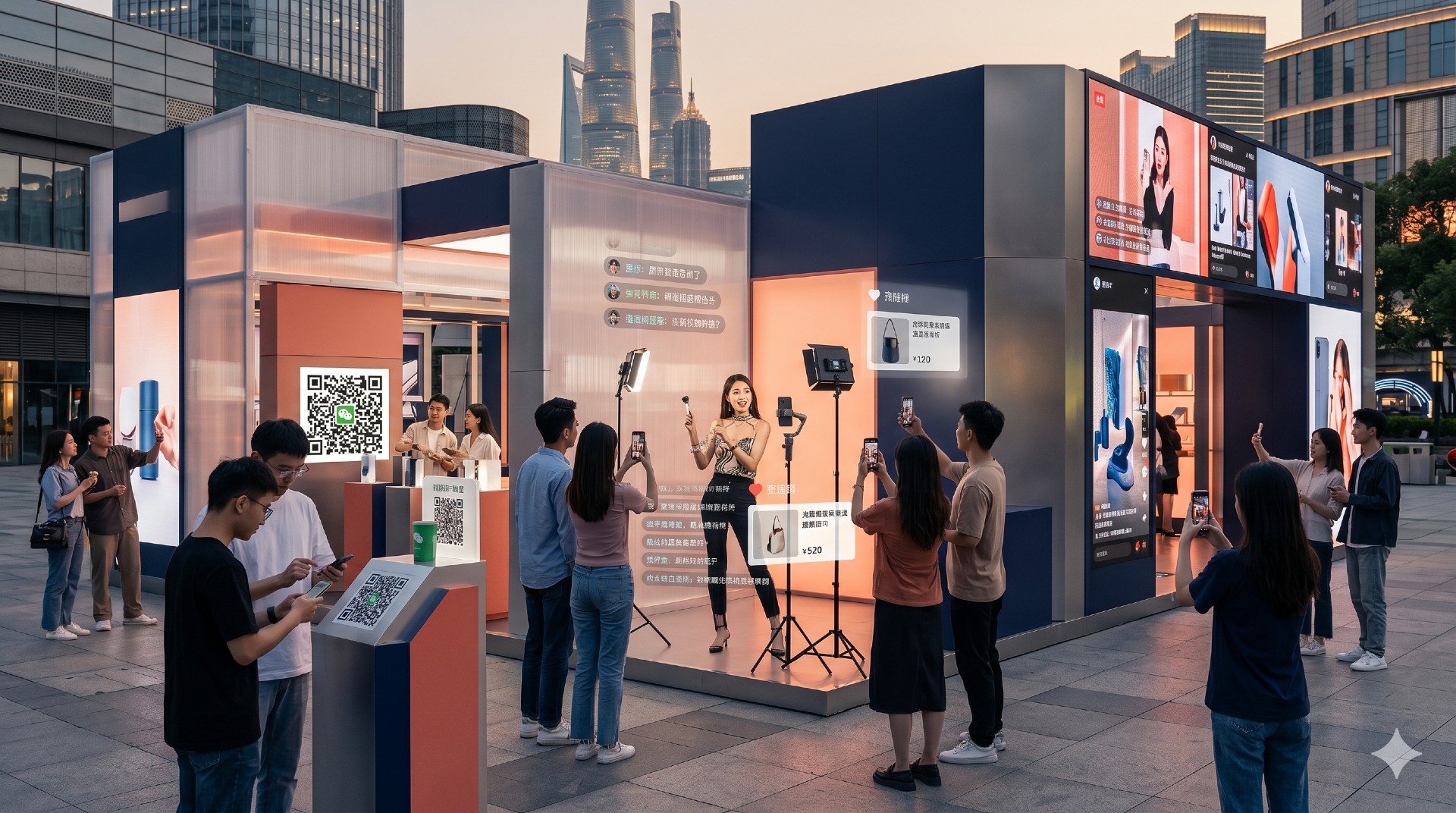
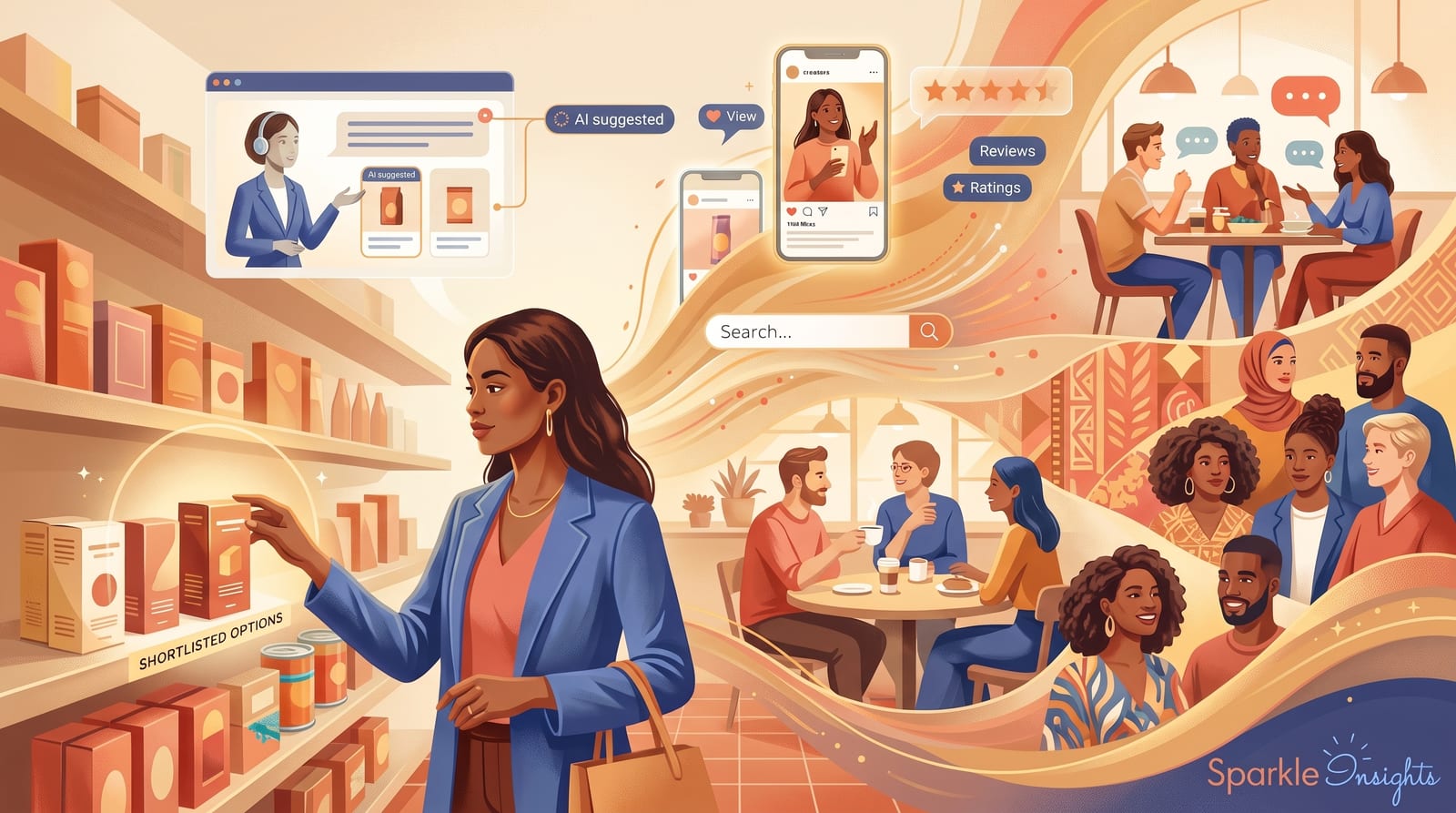
This is especially important now as U.S. consumers increasingly discover products through creators, communities, algorithms, and AI-driven search. Asian and Asian American cultural ecosystems often reveal how commerce, content, identity, and community intersect.
How Sparkle Insights Helps Brands Go Beyond Visibility
At Sparkle Insights, we believe Asian American consumer strategy should be built on nuance, not assumptions.
Our work helps brands understand:
- How Asian American consumers define identity today
- Which cultural cues create resonance versus fatigue
- How different Asian American subgroups discover, evaluate, and trust brands
- Where family, community, creators, and digital platforms shape decisions
- How Asian and Asian American trends may signal broader U.S. market shifts
- How brands can show up with relevance, respect, and commercial impact
AAPI Heritage Month is a timely reminder that Asian American consumers deserve more than seasonal recognition. But the bigger opportunity is year-round: to understand one of the most dynamic, diverse, and influential consumer groups shaping the future of the U.S. marketplace.
The brands that win will not be the ones that simply make Asian Americans more visible.
They will be the ones that understand them more deeply.