One of the biggest challenges facing decision-makers today is identifying where consumer behavior is headed before the rest of the market catches up.
Demographics, sales data, and media trends remain important, but some of the most meaningful shifts often appear first in culture. The communities shaping entertainment, media, technology adoption, and consumer behavior today frequently influence where the broader market moves tomorrow.
Few examples illustrate this dynamic more clearly than the rise of soccer in the United States.
The 2026 FIFA World Cup has now ended after bringing 48 teams, 104 matches, and millions of spectators to the United States, Mexico, and Canada. Spain defeated Argentina 1–0 after extra time in the July 19 final, and total tournament attendance reached a record 6,810,966. (Inside FIFA)
The audience was equally significant. FOX reported that the final attracted 38.9 million viewers, making it the most-watched soccer telecast in U.S. television history. Across all 104 matches, FOX, FS1, and Tubi averaged 7.7 million viewers—more than double the U.S. English-language average for the 2022 tournament. Telemundo reported that more than 22.6 million people watched the final on its platforms, setting a record for a Spanish-language World Cup final in the United States. (Fox Sports)
For brands, however, the most important result was not the winner or even the record audience.
The bigger opportunity is understanding what the tournament revealed about the consumers who helped make soccer culturally and commercially important in the United States.
For decades, Hispanic communities have been central to U.S. soccer culture. Long before soccer became a priority for major advertisers, media companies, and sponsors, it was embedded in family traditions, neighborhood life, and cultural identity. What was once characterized as a niche sport now sits at the center of major media investments, sponsorship strategies, creator ecosystems, and national cultural conversations.
The World Cup did not create that transformation. It made it impossible to overlook.
Soccer’s rise reflects something larger than the growth of a sport. It reflects the growing influence of Hispanic consumers on culture, media, and commerce. The tournament offered a window into how one of the country’s most influential consumer groups is shaping expectations and signaling where the market may move next.
That is why decision-makers should pay attention. Soccer is not the story. It is the signal.
The Shift
For years, multicultural marketing was treated as a specialized discipline focused on distinct consumer segments. The underlying assumption was that mainstream culture existed at the center and multicultural audiences existed around it.
That assumption is becoming less relevant.
Influence increasingly flows in multiple directions. Trends, creators, media habits, languages, and consumer expectations often emerge within specific communities before spreading more broadly.
The evolution of soccer provides a useful example. A sport long embraced by Hispanic communities became the centerpiece of the largest U.S. soccer audience ever recorded. FOX’s tournament audience included record-breaking English-language viewing, while Telemundo reported that millions of English-speaking viewers also chose to experience the World Cup in Spanish. (Fox Sports)
That crossover matters. Spanish-language soccer coverage did not simply reach a predefined Spanish-dominant segment. It offered a style of storytelling, emotional energy, cultural familiarity, and sense of occasion that attracted viewers beyond traditional language categories.
The same dynamic is increasingly visible across entertainment, commerce, technology, and consumer culture. Culturally specific experiences can influence the broader market without losing the context that made them distinctive.
Understanding Hispanic consumers is therefore no longer solely about reaching a growing audience. It is also about recognizing where broader American culture is headed.
The Evidence
The demographic and economic trends remain difficult to ignore.
Approximately 68 million Hispanics live in the United States, representing roughly one in five Americans. Hispanic consumers have accounted for more than half of U.S. population growth since 2000, while the U.S. Latino economy generates approximately $4.4 trillion in annual economic output.
The World Cup demonstrated how this demographic and economic influence translates into media and cultural power.
Before the tournament, Nielsen estimated that North America was home to approximately 136 million soccer fans, an increase of nearly 11% over five years. It also found that the sport plays an important role in the daily lives of 60% of the region’s fans. (Nielsen)
The tournament then converted that momentum into historic participation:
- Nearly 6.81 million people attended matches, almost twice the previous attendance record set at the 1994 World Cup. (Inside FIFA)
- More than 5.5 million people attended official FIFA Fan Festivals during the group stage alone, illustrating the importance of public viewing, food, music, and social participation around the matches. (FIFA)
- FOX’s coverage generated 17.2 billion digital content views, showing that tournament participation extended far beyond linear television. (Fox Sports)
- Telemundo’s final audience exceeded 22.6 million, confirming the continuing scale and commercial importance of Spanish-language soccer coverage. (TELEMUNDO.com)
Commercial investment reflected this momentum. Nielsen had identified approximately $1.8 billion in television advertising across eight major international soccer tournaments leading into World Cup 2026. (Nielsen)
Mexican Americans, who account for roughly 60% of the U.S. Hispanic population, have played a particularly important role in shaping soccer culture. Liga MX, the Mexican National Team, international competitions, Spanish-language media, and local fan traditions created an established soccer ecosystem well before the World Cup arrived.
TelevisaUnivision’s pre-tournament results underscored that strength: in February 2026, its Liga MX, Mexican National Team, and UEFA coverage produced record sports audiences across Univision, UniMás, TUDN, and ViX. (TelevisaUnivision)
Together, these figures show how demographic growth, cultural influence, media behavior, and commercial investment reinforce one another.
What the Tournament Revealed
Soccer remains a shared experience
One reason soccer continues to matter is that it functions as a shared experience at a time when much media consumption has become increasingly individualized.
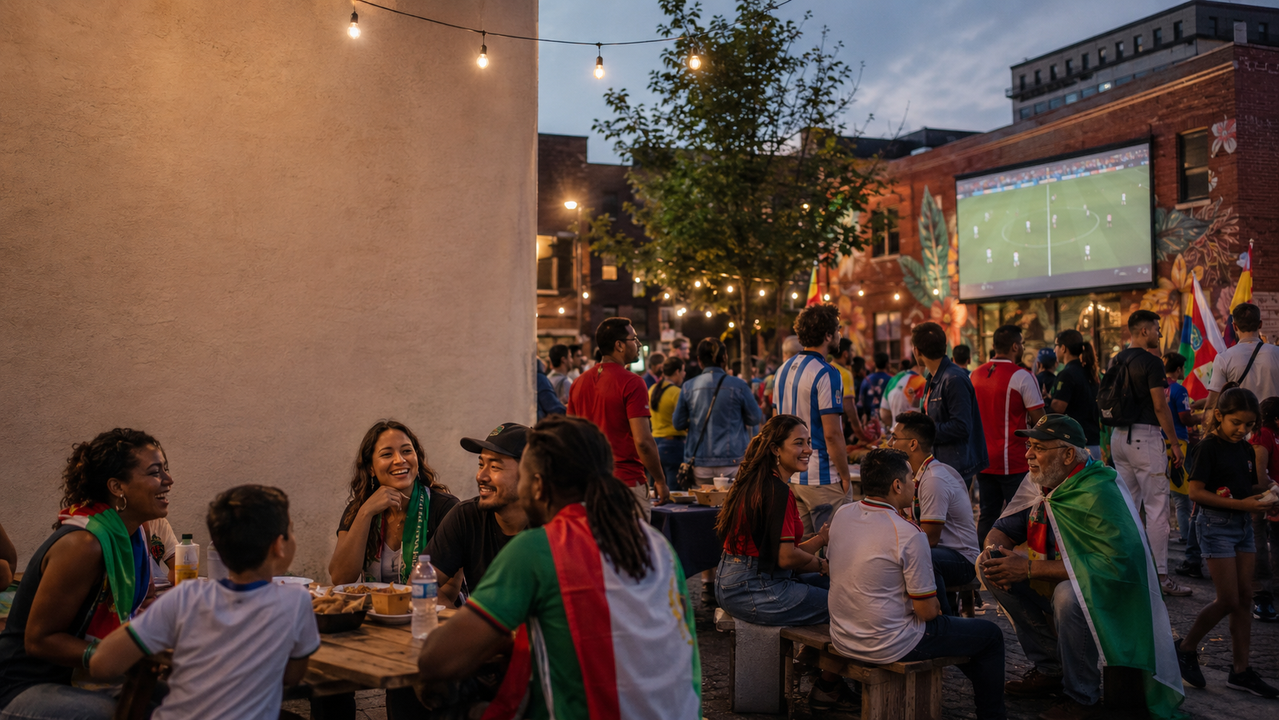
Streaming platforms, personalized algorithms, and social feeds often produce customized experiences consumed alone. Soccer frequently operates differently. Watch parties, family gatherings, restaurants, fan festivals, neighborhood celebrations, and group conversations remain central to the experience.
The scale of FIFA Fan Festival attendance showed that consumers were not merely looking for access to matches. They wanted collective participation. (FIFA)
For many Hispanic consumers, soccer is not simply entertainment. It is a cultural touchpoint that reinforces family connections, community ties, national and local identity, and a sense of belonging. Matches become occasions for gathering across generations and across levels of soccer knowledge.
The tournament also attracted culturally engaged casual viewers who may not follow soccer every week but wanted to take part in a major communal moment.
For brands, this creates opportunities to facilitate connection rather than simply compete for attention.
Hispanic media can have crossover influence
World Cup 2026 also challenged conventional assumptions about language.
Telemundo reported that millions of English-speaking viewers chose to watch tournament coverage in Spanish. This suggests that some consumers select media not only according to language proficiency but also according to cultural energy, commentary style, personalities, familiarity, and emotional connection. (TELEMUNDO.com)
The implication extends beyond soccer. Multicultural media should not be understood exclusively as a narrow tool for reaching a predefined ethnic audience. It can also be a source of differentiated experiences that attract broader audiences.
This does not mean cultural specificity should be diluted to achieve crossover reach. The cultural context may be precisely what makes the experience compelling.
Identity is layered and situational
The popularity of soccer reveals how identity is becoming more multidimensional.
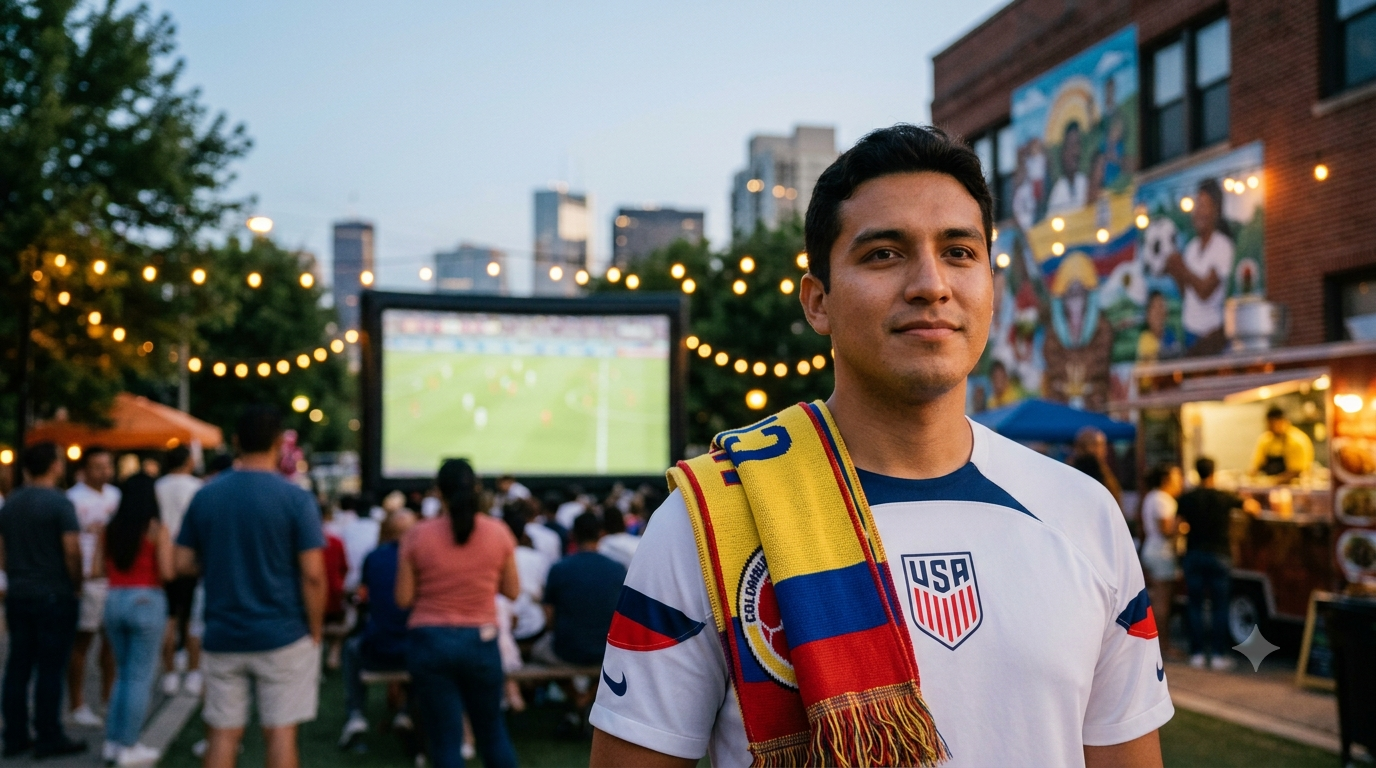
Many Hispanic consumers are not choosing between cultures. They integrate multiple identities simultaneously. A consumer may primarily speak English, watch the World Cup on FOX and Telemundo, follow both the NFL and Liga MX, support Team USA and a heritage-country team, and maintain strong ties to cultural roots at the same time.
The 2026 final made this especially visible. Spain and Argentina brought together Spanish-speaking audiences, diaspora communities, international soccer followers, casual American viewers, and consumers who moved among English- and Spanish-language coverage.
This reality challenges segmentation models that rely heavily on language preference or broad demographic labels. Identity is contextual. The assumption that consumers can be neatly categorized as either “general market” or “multicultural” is increasingly disconnected from how many people live and consume media.
Local community activation created relevance
Although the World Cup was a global tournament, much of its cultural meaning was created locally.
Host-city festivals, neighborhood restaurants, local radio, community viewing events, creators, and small businesses translated the global spectacle into experiences that felt personal. TelevisaUnivision’s Spanish-language radio partnership, for example, provided World Cup broadcasts in major Hispanic markets including New York, Dallas, Houston, and Chicago. (TelevisaUnivision)
This reinforces an important principle: national media creates scale, but local participation often creates credibility.
Brands that treated every market the same risked overlooking differences in country of origin, local soccer traditions, language use, community institutions, and neighborhood culture.
Authenticity was tested in real time
The tournament raised the bar for authenticity.
Consumers could immediately compare sponsorship claims with actual brand behavior. They could see which companies supported local organizations, worked with culturally credible creators, created useful experiences, or invested in community participation—and which merely added flags, translated taglines, or appeared when attention peaked.
For Hispanic consumers, authenticity often means understanding differences across countries of origin, generations, language use, geography, and levels of acculturation. It means recognizing that Mexican, Colombian, Argentine, Puerto Rican, Salvadoran, and other identities are not interchangeable.
Most importantly, it means showing up consistently rather than appearing only for a major cultural moment.
What Brands Should Do Now
The final whistle should begin the retention and learning phase—not end the strategy.
Understand who became more engaged
Brands should examine which audiences moved closer during the tournament.
That includes changes in awareness, relevance, trust, participation, and consideration—not just exposure. Research should distinguish among committed soccer followers, heritage-team loyalists, Team USA supporters, culturally engaged casuals, family-influenced viewers, and people who participated mainly through food, music, creators, or social gatherings.
Continue the audience relationship
Not every World Cup viewer will become a weekly soccer fan.
Some will continue through Liga MX, Major League Soccer, international clubs, women’s soccer, youth soccer, or future national-team competitions. Others will remain event-driven fans who return for major tournaments and communal experiences.
Brands need different continuation strategies for these groups rather than sending every participant the same soccer content.
Protect the value of Spanish-language and culturally specific media
The tournament demonstrated that Spanish-language media can generate both strong Hispanic engagement and crossover appeal.
Brands should analyze which audiences chose Spanish-language coverage, why they chose it, and which elements—commentators, emotion, entertainment, community, or cultural familiarity—strengthened the experience.
The lesson is not simply to buy more translated advertising. It is to understand the distinctive value of the environment.
Maintain community partnerships
Consumers notice when brands disappear after a major event.
Post-tournament investment might include youth leagues, school programs, local clubs, scholarships, community events, media partnerships, or nonprofit organizations serving Hispanic communities throughout the year.
These initiatives may not generate the visibility of a World Cup sponsorship, but they can build stronger local relationships and demonstrate commitment that audiences recognize.
The goal is not simply to sponsor an event. It is to become a credible participant in the communities and experiences that matter to consumers.
Evaluate creators by trust, not only reach
Creators played an important role in translating matches into reactions, humor, cultural explanations, food, fashion, and community conversation.
Brands should determine which partners generated meaningful participation rather than merely large impression totals. The strongest creators can become longer-term collaborators in storytelling, product development, community activation, and consumer insight.
Measure cultural and community impact
Conventional campaign metrics will not fully capture what the tournament changed.
Brands should measure:
- Whether cultural relevance increased
- Which Hispanic subgroups responded most strongly
- Whether Spanish-language activity reached beyond expected audiences
- Which local partnerships generated participation
- Whether community businesses benefited
- Which new audience behaviors continued after the final
- Whether consumers viewed the brand as a credible participant or a temporary sponsor
Why Cultural Intelligence Matters
Most importantly, brands should move beyond multicultural marketing as a campaign function and toward cultural intelligence as a strategic capability.
Cultural intelligence should inform audience strategy, innovation, communications, product development, customer experience, media planning, and growth decisions.
World Cup 2026 showed why.
The tournament’s record scale could be measured through attendance, ratings, and digital views. But those figures alone cannot explain why consumers selected one language feed over another, how family and national identities shaped team loyalty, why some community activations felt meaningful, or which audience relationships will endure.
Those questions require a deeper understanding of how people live, gather, identify, make decisions, and engage with brands.
As media becomes more fragmented and consumer journeys become more complex, that understanding becomes increasingly valuable. Brands can invest heavily in sponsorship and media while still missing important opportunities if their view of the audience is incomplete.
The advantage is not simply more efficient targeting. It is better decision-making.
Brands that understand consumers more fully are better positioned to identify unmet needs, recognize emerging behaviors, build credible relationships, and uncover opportunities competitors overlook.
Understanding Hispanic consumers is not simply about reaching a specific audience. It is about recognizing how culture, identity, language, and community shape consumer expectations—and how those expectations are increasingly influencing the broader market.
Soccer’s rise was the signal.
World Cup 2026 confirmed its importance.
References
- FIFA. “Spain Crowned FIFA World Cup 2026 Champions in New York New Jersey.” July 19, 2026.
- FIFA. “Spain Soar at Game-Changing FIFA World Cup 2026.” July 20, 2026.
- FIFA. “FIFA Fan Festival Sets Group Stage Records.” June 30, 2026.
- FOX Sports. “FOX Records 38.937M Viewers for FIFA World Cup 2026 Final.” July 21, 2026.
- Latino Donor Collaborative and UCLA Latino GDP Project. 2024 U.S. Latino GDP Report.
- Nielsen. 2024 Diverse Intelligence Series: Hispanic Sports Fans.
- Nielsen. “Inside the Multibillion-Dollar U.S. Soccer Ad Market.” 2026.
- Nielsen. “The Fans Behind the Game: FIFA World Cup 2026 Edition.” 2026.
- Pew Research Center. “Key Facts About U.S. Latinos.”
- Telemundo. “Telemundo Breaks Record with the FIFA World Cup 2026 Final.” July 21, 2026.
- TelevisaUnivision. “TelevisaUnivision Delivers Historic Sports Milestones with Record Ratings.” March 4, 2026.
- U.S. Census Bureau. Population Estimates and Hispanic Population Growth.