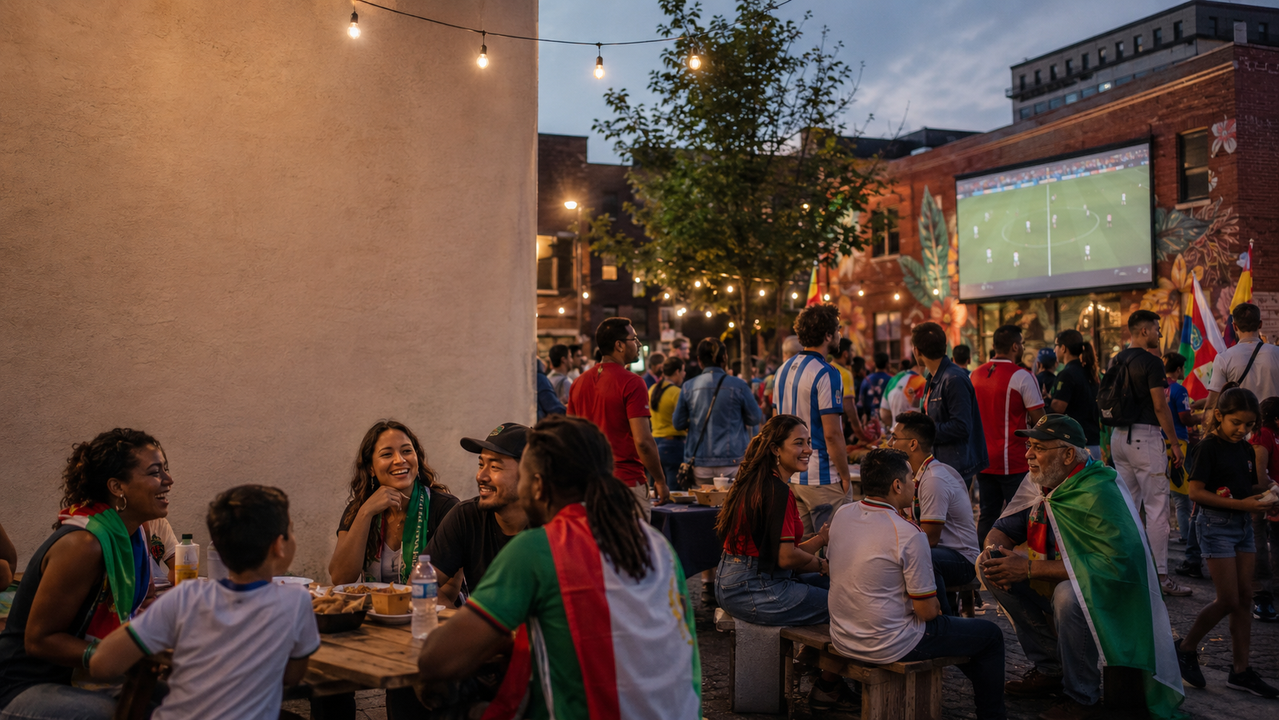
At NC Startup Week, Jonah Berger offered a useful reminder for founders and marketers alike: great ideas do not spread simply because they are good. They spread when people want to talk about them, remember them, and pass them on. In his keynote, Berger framed that through a familiar but powerful set of drivers: social currency, triggers, emotion, public visibility, practical value, and stories. He also emphasized that word of mouth often outperforms advertising because it is more trusted and more likely to travel through real human relationships.
He is right.
But from Sparkle’s point of view, that is where the more interesting question begins.
The challenge for brands today is not only understanding why people share. It is understanding why different people share differently. The psychology of diffusion matters. But so do culture, community, identity, language, social norms, and trust networks. A framework may be universal in theory while still producing very different outcomes in practice.
At Sparkle Insights, we believe brands make better decisions when they understand people deeply, culturally, and meaningfully. Our work is rooted in the idea that culture shapes decisions, that influence flows through real social systems, and that insights only matter when they can travel into strategy, creative development, and action.
That is why word of mouth is never culturally neutral.
The Framework Is Useful But The Reality Is More Complex
Berger’s framework works because it captures something fundamentally human. People do share things that make them feel smart, interesting, or “in the know.” They are more likely to remember what is tied to familiar cues. They do respond to stories more than facts alone. And they are more likely to trust something they hear from another person than something they hear from a brand.
But those principles often get flattened when brands try to apply them at scale.
Too often, teams hear a general rule and assume the execution is obvious. “Make it remarkable.” “Create a trigger.” “Give people social currency.” The language sounds simple. The problem is that none of those things mean the same thing in every audience.
What feels remarkable in one community may feel excessive in another. What signals status in one group may signal superficiality in another. What functions as a trigger for one audience may not even exist in another audience’s daily routine. The mechanism may be shared. The meaning is not.
That gap between universal principle and cultural reality is where many campaigns lose power.

Social Currency Depends on What a Community Rewards
One of Berger’s most compelling points is that people share things that make them look good to others. They want to seem smart, early, special, or connected. That is true. But brands often stop there.
The real question is: what kind of status matters here?
In some communities, being first carries social value. In others, discernment matters more than novelty. In some audiences, insider access is a badge of sophistication. In others, sharing something practical and genuinely useful creates more credibility than showing off exclusivity. In some groups, humor drives connection. In others, thoughtfulness or relevance earns more respect.
This is where cultural intelligence changes the work. If you do not understand what a specific audience sees as smart, generous, tasteful, credible, or worth repeating, you can easily build the wrong kind of social currency. The message may still be noticed. It just will not be carried forward in the way you intended.
For multicultural brands, this matters even more. The same message can signal aspiration in one group and inauthenticity in another. The same campaign can make one audience feel included and another feel misread.
Triggers Only Work If They Exist in People’s Real Lives
Berger also makes a strong case for triggers: the idea that what stays top of mind is more likely to get talked about and acted on. He uses examples like Cheerios and breakfast or Kit Kat and coffee to show how brands gain power when they attach themselves to frequent cues in people’s daily lives.
Again, the principle is solid.
But everyday life is not culturally identical.
Routines differ across households, generations, professions, and communities. The media people consume is different. The rituals that shape mornings, mealtimes, weekends, and celebrations are different. The language environment is different. The social settings in which a category becomes relevant are different. Even the people who influence a purchase decision may be different.
This is why trigger strategy cannot be separated from audience reality.
A brand may think it has identified an obvious cue, but if that cue is not actually embedded in the lived experience of the target audience, the trigger will not fire. Or it may fire in the wrong emotional context. Or it may work for one segment and completely miss another.
For multicultural strategy, triggers are not just category associations. They are cultural associations. They live inside routines, relationships, rituals, and contexts that vary meaningfully across groups.
Stories Travel Differently Across Communities
Berger’s point about stories may be the most important of all. People do not pass along isolated product claims. They pass along stories that carry the message with them. A fact is forgettable. A story gives it motion.
Sparkle would take that one step further.
Stories do not travel in a vacuum. They travel through audiences with different emotional codes, different definitions of authenticity, and different expectations about what is appropriate to share.
Some audiences respond strongly to humor. Others respond more to dignity, resilience, family, or ingenuity. Some communities reward bold self-expression. Others place more value on humility, relational awareness, or collective benefit. Some stories are sticky because they feel surprising. Others are sticky because they feel deeply familiar.
That means the job is not simply to build a memorable story. It is to build a story that remains meaningful as it moves through the cultural and social worlds of the people you most need to reach.
A story that performs in a brainstorm or a pitch room may not survive contact with real communities if the emotional logic is off. It may get attention without earning advocacy. It may be memorable without being embraced. It may travel, but with the wrong interpretation attached.
Trust Networks Are Not One-Size-Fits-All
Another key thread in Berger’s talk is that word of mouth works because people trust people more than they trust advertising. That is one of the clearest truths in modern marketing.
But trust is not evenly distributed.
Word of mouth does not move through one generic “consumer network.” It moves through specific trust systems: family, peers, professional circles, language communities, neighborhood ties, diaspora communities, social platforms, niche online groups, and cross-generational relationships. Different communities rely on different validators. Different messages need different carriers.
This is especially important in multicultural markets. Influence may run through channels that are invisible to brands relying too heavily on mainstream assumptions. A message may look strong in broad-market creative review but fail to gain traction because it is not entering the right trust network. Or because the messenger does not match the audience’s trust logic. Or because the message asks people to carry something that does not fit how they naturally advocate for others.
Understanding who is trusted is important. Understanding why they are trusted is even more important.

What Sparkle Adds to the Conversation
At Sparkle, we do not see cultural intelligence as a layer you add after the strategy is done. We see it as part of how strategy becomes accurate in the first place.
Our public philosophy is clear: technology can accelerate work, but it cannot replace cultural nuance, lived experience, or human judgment. Our work is rooted in identity, values, norms, and influence flows, and we help organizations translate that understanding into decisions that are simpler, sharper, and more effective.
So if we were applying Berger’s framework through a Sparkle lens, we would ask a deeper set of questions:
Not just, “Will people talk about this?”
But, “Who will talk about this, in what way, and to whom?”
Not just, “Is this remarkable?”
But, “What does ‘remarkable’ mean in this audience’s cultural context?”
Not just, “What trigger should we attach to?”
But, “What cues actually exist in this community’s real life?”
Not just, “What story are we telling?”
But, “Will this story still feel authentic as it moves across audiences, relationships, and settings?”
Those are not academic distinctions. They are strategic ones.
The Future of Word of Mouth Will Belong to Brands That Understand Culture
As AI-generated messaging becomes more common, it will get easier to produce content that looks polished, structured, and persuasive. But polish is not the same as resonance. Scale is not the same as trust. Language is not the same as meaning.
That is why cultural intelligence is becoming more valuable, not less. Sparkle’s own point of view is that AI raises the premium on human interpretation, nuance, and strategic clarity. In a world filled with generated messages, the brands that stand out will be the ones that understand how meaning actually moves across real human communities.
The brands that win will not just know the science of sharing.
They will know how sharing changes across audiences.
They will understand what status looks like in different communities. What trust sounds like. What emotional tone invites advocacy. What social signals feel native rather than imported. And what kinds of stories can cross boundaries without losing their meaning.
Word of mouth may be universal.
But the way it works is not.