Consumers like to think of themselves as rational decision makers. They compare prices. They read reviews. They evaluate features. They ask friends. Increasingly, they ask AI.
But most purchase decisions are not purely rational. They are emotional, contextual, social, sensory, and identity-driven. Even when consumers use rational language to explain what they bought, the deeper drivers are often about confidence, desire, convenience, self-expression, belonging, aspiration, or relief.
That tension matters because the next era of commerce will not be defined by a simple shift from human shopping to AI shopping. It will be defined by a more complex split: consumers will use AI when they want help reducing risk, but they will still rely on emotion, impulse, and experience when shopping is about pleasure, identity, discovery, or escape.
In other words, AI will change the shopping journey. But it will not remove the emotional human from it.
AI Will Matter Most When the Decision Feels High-Stakes
For big-ticket items, complicated categories, or purchases with meaningful financial consequences, AI is likely to become a powerful research layer. Consumers may ask AI to compare options, summarize reviews, identify tradeoffs, check prices, calculate long-term value, and narrow the field before they ever visit a store or brand site.
This is already becoming visible. McKinsey describes “agentic commerce” as a progression toward greater levels of shopping automation, from basic rule-based convenience to more autonomous coordination across products, services, and merchants. (McKinsey & Company) Google has also expanded Gemini into shopping through partnerships with retailers including Walmart, Shopify, and Wayfair, allowing consumers to browse and purchase through an AI interface rather than a traditional retailer website. (AP News)
That makes intuitive sense. When the stakes are high, consumers want reassurance. They want to feel they are not missing something. They want to know they are getting the best value. AI can serve as a confidence engine.
This will be especially relevant for categories such as:
- cars, appliances, electronics, furniture, financial products, insurance, travel, healthcare-adjacent purchases, home improvement, and education
- products with high price points, long consideration cycles, complex specifications, or fear of regret
- categories where consumers feel overwhelmed by information or distrustful of marketing claims
For brands, this means the consideration journey may increasingly begin before the consumer reaches them. The first “conversation” may happen between the consumer and an AI assistant. If a brand’s product data, reviews, pricing, claims, and differentiators are not clear and machine-readable, the brand may be filtered out before it has a chance to persuade.
Deloitte has noted that retail executives are already concerned that generative AI could weaken brand loyalty by prioritizing value and fit over brand recognition. (Insights2Action) That is a major strategic warning. In an AI-assisted decision environment, brands cannot rely only on awareness. They must be legible, credible, comparable, and emotionally meaningful.
But Everyday Shopping Will Still Belong to Emotion
The rise of AI does not mean consumers will become hyper-rational optimizers in every category. Most everyday shopping will still be emotional.
A snack, a beauty product, a drink, an accessory, a candle, a toy, a limited-edition drop, a seasonal item, or a small indulgence is often not purchased because it won a spreadsheet comparison. It is purchased because it feels right in the moment.
The consumer sees it. Touches it. Smells it. Imagines using it. Notices that others are buying it. Associates it with a mood, a memory, an aesthetic, a creator, a cultural moment, or a version of themselves they want to inhabit.
Even when AI enters these categories, it may not replace impulse. It may amplify it. A personalized recommendation, a creator video, an AI-generated bundle, a smart mirror, or a social commerce prompt can all become emotional triggers rather than rational filters.
BCG has found that shoppers are using GenAI across both big-ticket and routine categories, including everyday purchases such as groceries. (BCG Global) That does not mean grocery shopping has become purely rational. It suggests that AI is becoming another layer in the journey: one that can assist, suggest, personalize, and reduce friction. The emotional work of desire, appetite, identity, and habit remains deeply human.
This distinction is important. Brands should not assume that AI makes consumers less emotional. In many cases, AI may simply move consumers faster toward the emotional decision they were already inclined to make.
The Revival of In-Person Shopping Is Not a Contradiction
At the same time that AI is becoming more powerful, there is renewed interest in physical retail, mall culture, browsing, and in-person experiences. That may look contradictory, but it is not.
The more digital life becomes, the more valuable physical experiences can feel.
For younger consumers especially, in-person shopping is not just a transaction. It is social, tactile, expressive, and content-worthy. Gen Z’s renewed interest in malls has been tied to immediate gratification, tactile product interaction, social connection, and the blending of digital and physical experiences. (Empower)
Retail development is also shifting away from traditional malls as purely transactional shopping centers and toward mixed-use environments where people can shop, eat, gather, socialize, work, and spend time. The planned redevelopment of The Shops at Willow Bend in Plano, Texas into a mixed-use open-air district reflects this broader movement from enclosed retail to lifestyle-based environments. (Chron)
This is a critical insight: the future of physical retail is not simply “stores.” It is environments.
Consumers may use AI to narrow options, but they still want places to browse. They may compare prices digitally, but they still want to touch fabric, test products, try samples, take photos, meet friends, discover something unexpected, and feel part of a cultural moment.
In fact, AI may increase the value of in-person experiences because it makes purely functional shopping easier to automate. If AI can handle the boring parts of shopping, physical retail must become better at the human parts: sensation, surprise, service, community, storytelling, and play.
Immersive Brand Experience Will Be Hybrid by Default
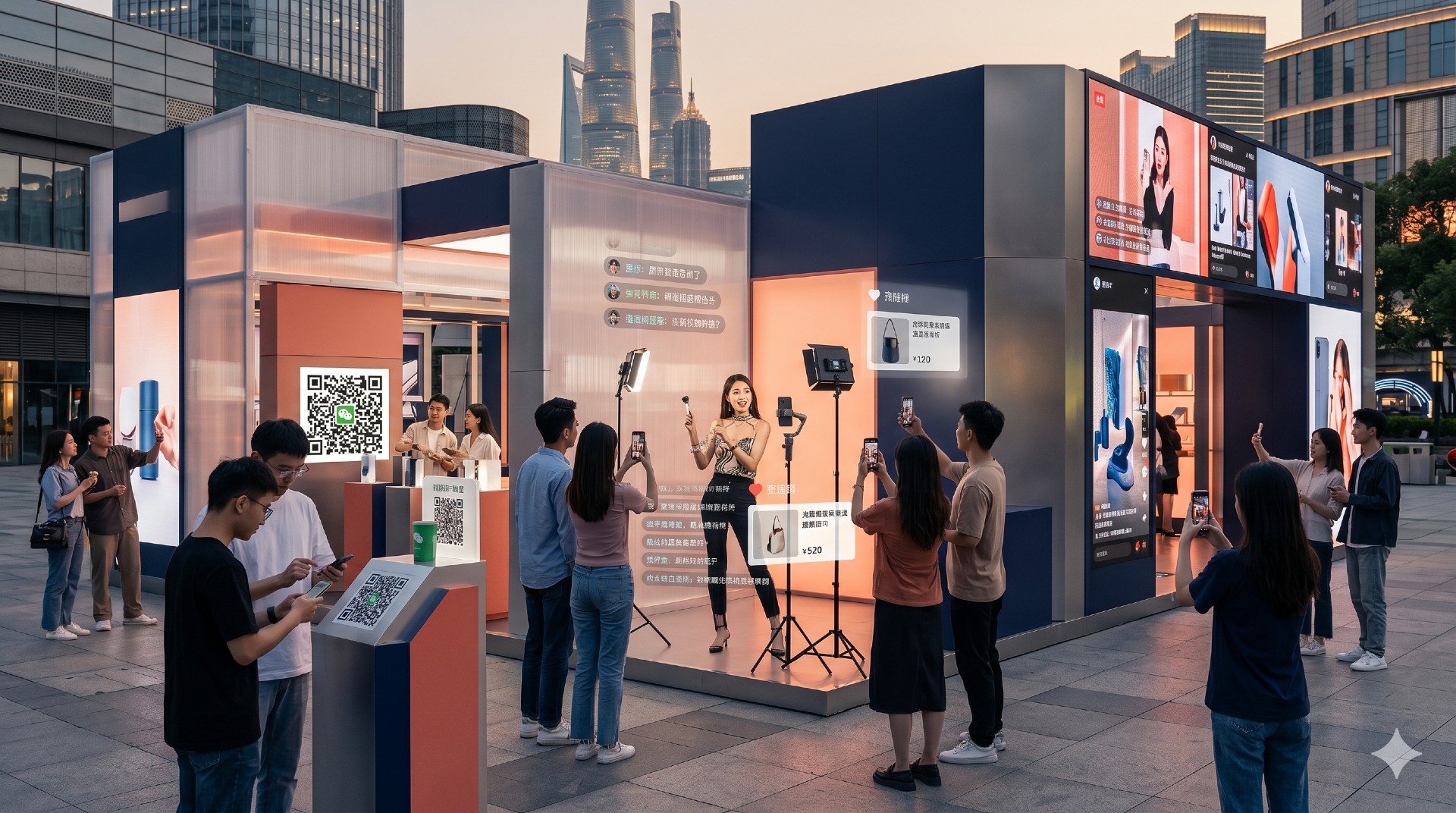
The most effective brand experiences will not be only AI, only digital, only social, or only in-person. They will combine all four.
A strong immersive experience might begin with social discovery, continue through AI-assisted personalization, show up in a physical retail environment, and then extend back into digital content and community.
Claire’s recent Gen Alpha reboot is a useful example. The brand’s “Summer Sensory Shop” concept is designed around sensory engagement, in-store experience, content creation, and repeat visits. (Axios) That is not simply retail merchandising. It is an ecosystem: product, play, social sharing, identity, and place.
This is where many brands will need to evolve. Too often, companies treat AI, social, e-commerce, and physical retail as separate workstreams. But consumers do not experience brands that way. They move fluidly across touchpoints.
They may discover a product on TikTok, ask AI whether it is worth buying, check reviews, visit a store with friends, try it in person, post about it, and reorder online. The emotional and rational parts of the journey are intertwined.
The future brand experience must therefore answer several questions at once:
- What does the consumer need AI to understand?
- What does the consumer need to feel in person?
- What makes the experience socially shareable?
- What makes the brand credible when compared by machines?
- What creates enough emotional pull to overcome pure price optimization?
The Strategic Implication: Brands Need to Design for Both the Algorithm and the Feeling
The next era of commerce will reward brands that can operate in two modes at the same time.
First, they must be optimized for AI-assisted evaluation. That means clear product information, transparent claims, consistent pricing, strong reviews, structured data, and meaningful differentiation.
Second, they must be emotionally resonant. That means sensory appeal, cultural relevance, social proof, identity cues, storytelling, community, and memorable experience.
The mistake would be to believe that AI makes branding less important. It may actually make branding more important, but in a different way.
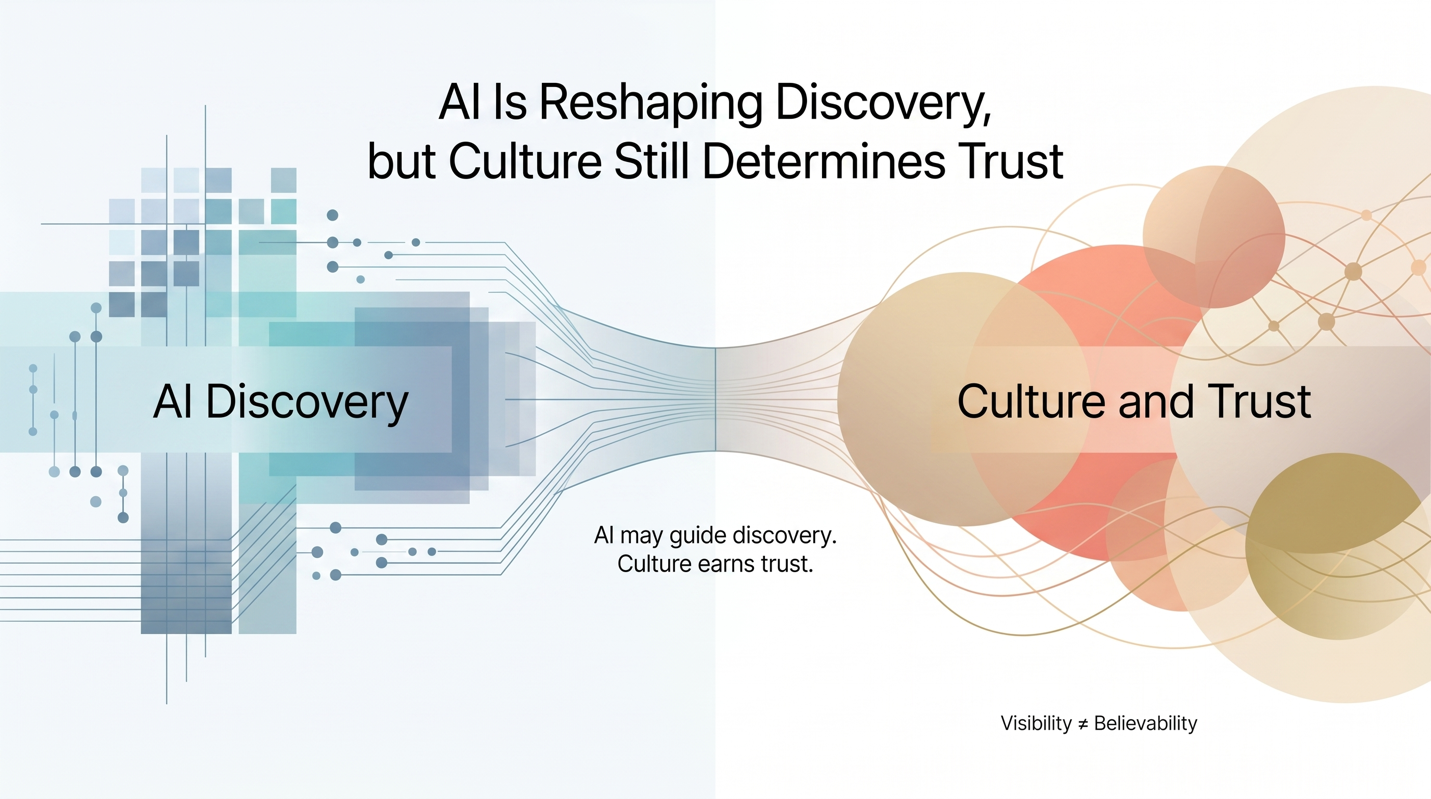
If AI handles the rational sorting, then emotional differentiation becomes even more valuable. If every product can be compared instantly, consumers need a reason to care. If AI can find the cheapest option, brands need to create meaning beyond price. If digital commerce becomes more automated, in-person experience becomes a more powerful stage for connection.
What This Means for Research and Strategy
For insights teams, this moment calls for a more sophisticated understanding of decision-making. Traditional purchase funnels may not be enough. Brands need to understand when consumers want optimization, when they want inspiration, when they want reassurance, and when they want emotional permission to buy.
Sparkle Insights can help brands explore questions such as:
- Which categories are consumers most willing to delegate to AI?
- Which decisions still require human reassurance, sensory experience, or social validation?
- What role does emotion play after AI has narrowed the choices?
- How do Gen Z, Gen Alpha, multicultural, and Asian American consumers combine digital discovery with in-person experience?
- What makes a brand experience feel worth leaving the house for?
- How can brands design experiences that are AI-readable, socially shareable, and emotionally memorable?
The opportunity is not to choose between AI commerce and emotional commerce. The opportunity is to understand how they interact.
Sparkle Point of View
The future of shopping will not be fully automated. It will be assisted.
Consumers will use AI to reduce uncertainty, especially when the purchase feels expensive, complex, or risky. But they will continue to rely on emotion, impulse, sensory experience, and social context for the purchases that make life feel expressive, pleasurable, and human.
As AI becomes a more powerful layer in purchase research, brands must become easier for machines to understand and harder for humans to forget.
The winning brand experience will be rational enough for AI to recommend, emotional enough for consumers to desire, social enough to spread, and physical enough to feel real.