For years, marketers relied on a relatively simple model of the consumer journey: a shopper saw an ad, visited a website, and made a purchase. That model no longer captures how people actually shop.
Today’s U.S. consumer journey is fragmented, dynamic, and deeply influenced by culture, creators, platforms, algorithms, and convenience. Discovery can begin almost anywhere — on TikTok, YouTube, Instagram, Google, retailer media, group chats, or increasingly inside AI tools. Validation happens across multiple touchpoints, and purchase often occurs in a different place from where interest began.
The result is a marketplace where discovery is more distributed, trust is more contextual, and conversion is still driven by familiar fundamentals: price, convenience, availability, and confidence.
For brands, that means the key challenge is no longer simply “how do we drive awareness?” It is “how do we show up coherently across the messy, multi-touch journey consumers now use to discover, evaluate, and buy?”
Discovery Is No Longer Linear
The biggest shift in the current shopping journey is at the top of the funnel.
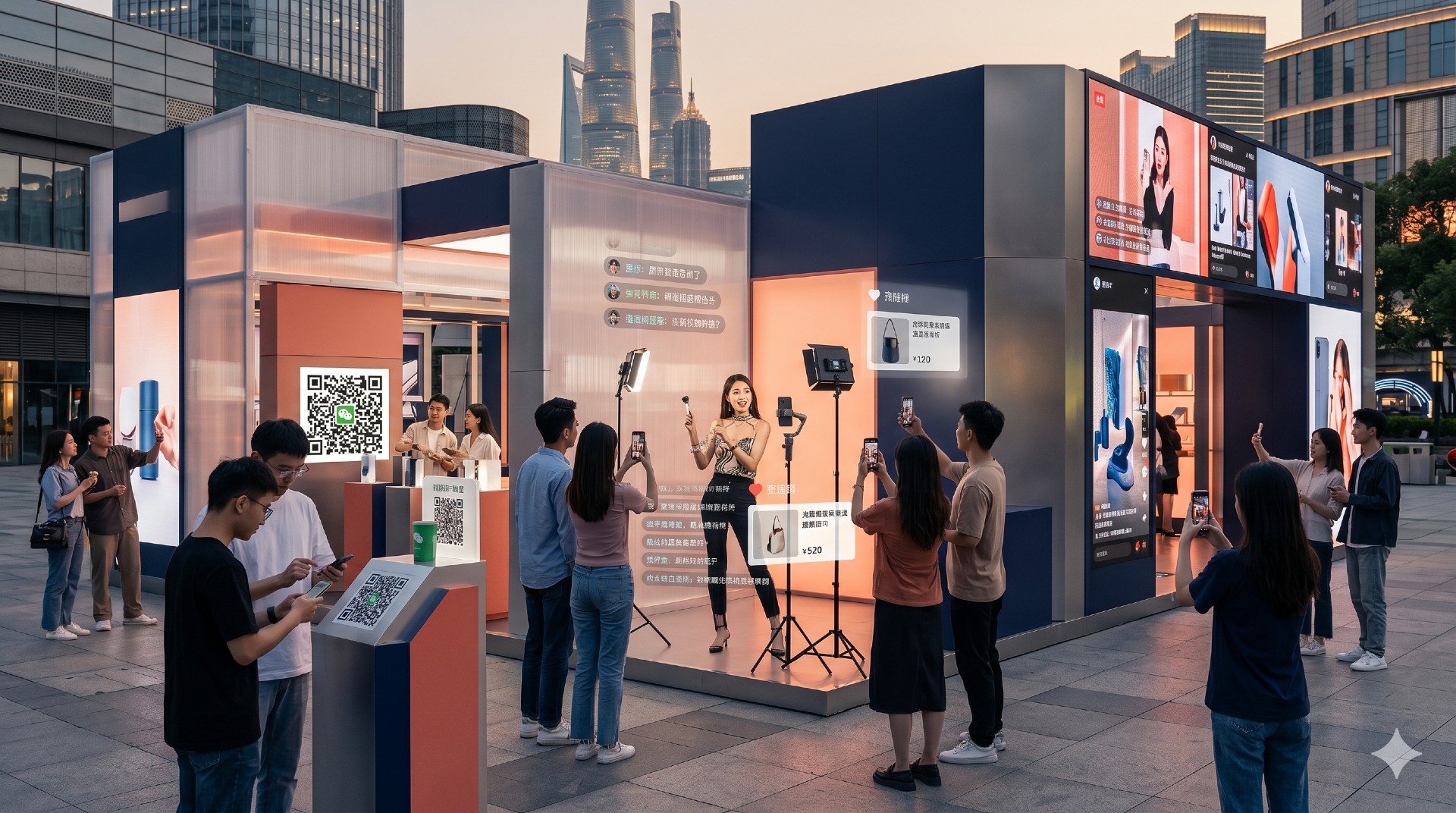
Consumers are no longer discovering products in one dominant place. Instead, discovery now happens through a mix of short-form video, creator recommendations, search results, retail media, peer signals, and algorithmic suggestions. A product might first appear in a creator’s routine video, surface again in social comments, get searched on Google, compared on Amazon or Target, and finally purchased in-store or through a retailer app.
This means discovery is no longer just media exposure. It is cultural exposure.
Consumers are often introduced to brands through content that feels native to their everyday digital lives: routines, reviews, “haul” videos, tutorials, trend breakdowns, fandom spaces, niche communities, and trusted creators. In many categories, especially beauty, fashion, food, home, and wellness, discovery increasingly feels less like advertising and more like participation in an ongoing conversation.
Validation Is the New Battleground
If discovery is fragmented, validation is where many decisions are actually made.
Today’s shoppers rarely rely on a single source of truth. Instead, they cross-check. They look at reviews, compare prices, search for creator opinions, scan comments, visit retailer pages, ask friends, and increasingly use AI tools to narrow down options or summarize choices.
In other words, the middle of the funnel has become the place where consumers assemble confidence.
This has major implications for brands. It is no longer enough to generate visibility in one channel. Brands also need consistency across the places consumers go to verify whether a product is worth buying. A strong creator campaign can create demand, but if retailer reviews are weak, product details are unclear, or pricing feels out of step, the sale can easily be lost.
The consumer journey now rewards brands that connect inspiration with reassurance.
Purchase Is Still Pragmatic
Even as discovery evolves, the final purchase decision often comes down to practical factors.
Consumers may discover a product through social content or creator influence, but they still frequently convert where trust and convenience are strongest: major retailers, marketplaces, familiar brand sites, or physical stores. Fast shipping, easy returns, known pricing, promotions, and local availability continue to matter enormously.
That is what makes the modern journey so important to understand. Discovery may be emotional, social, or cultural. Purchase is often rational and situational.
Brands need to succeed in both worlds.
How the Journey Varies by Segment
While the broad shape of the U.S. consumer journey is similar across categories, the path varies meaningfully by age, culture, and mindset.
Gen Z: Socially Led, Creator-Shaped, Highly Contextual
Gen Z shoppers are especially likely to begin their journey in social and video environments. Discovery often starts with creators, trends, niche communities, or content formats that blur entertainment and recommendation. For this group, what shows up in-feed can feel as important as what shows up in search.
But Gen Z does not simply buy on impulse. They validate through comments, peer reactions, creator credibility, platform-specific search, and increasingly AI-assisted information gathering. Their journey is fast-moving but not necessarily shallow.
For brands, this means Gen Z discovery requires relevance, not just reach. Cultural fluency, creator fit, and contextual resonance matter more than polished broad-market messaging.
Millennials: Hybrid, Efficient, Omnichannel
Millennials often combine newer discovery behaviors with more structured evaluation habits. They may find products through social, creators, podcasts, or streaming, but they are more likely to shift quickly into search, reviews, retailer comparison, and purchase optimization.
This segment tends to value convenience, time savings, and confidence. Especially for parents and busy professionals, the ideal journey is one that moves smoothly from inspiration to proof to easy checkout.
Millennials are often the clearest example of the omnichannel shopper: open to discovery anywhere, but disciplined about where and how they convert.
Gen X and Older Consumers: Habit, Clarity, and Trust
Older consumers are generally more likely to rely on familiar trust structures. Their journey is often more search-led, retailer-led, and habit-led. While they may encounter products through social content or streaming environments, they are more likely to validate through direct search, known retailers, email, product detail pages, and established brand cues.
For these consumers, clarity often matters more than novelty. Straightforward information, strong service signals, and perceived reliability carry more weight than trend participation.
This does not mean older shoppers are not digital. It means they often use digital channels differently.
Asian American Consumers: Cross-Cultural, High-Context, and Often Ahead of the Curve
One of the most important strategic segments in the U.S. market is the Asian American consumer. In many categories, especially beauty, food, wellness, media, and digital commerce, Asian American audiences are not simply participating in trends; they are helping shape them.
What makes this especially important is that discovery often happens across a cross-cultural ecosystem. Mainstream U.S. media, ethnic media, creators, transnational trends, peer networks, and platform-native communities may all play a role in the journey. In categories like skincare and beauty, for example, product discovery may emerge through culturally specific routines, expertise, or overseas trend flows before broader U.S. marketing catches up.
For brands, this is a reminder that multicultural strategy cannot stop at representation. It has to extend into the actual mechanics of discovery, trust, and relevance.
Value-Conscious Consumers: Modern Discovery, Practical Conversion
Consumers under financial pressure often follow a journey that looks digitally current at the top but highly disciplined at the bottom. They may discover products through creators, social content, and trend culture just like everyone else, but when it comes time to buy, they are more likely to compare prices, wait for offers, look for bundles, and choose the retailer or channel that delivers the clearest value.
For this group, emotional relevance still matters. But value proof matters just as much.
Brands that connect aspiration with affordability will outperform those that rely only on image.
What This Means for Brands
The modern consumer journey is not simply more digital. It is more layered.
Consumers use different channels for different jobs. Social and creator content are powerful for discovery and cultural meaning. Search, reviews, and AI tools help with validation. Retailers and stores remain essential for conversion because they consolidate trust, convenience, and price comparison.
That means brands need to think less in terms of single-channel performance and more in terms of journey architecture.
The key questions are no longer just:
- Where are we advertising?
- How many impressions are we generating?
- What is our conversion rate?
The better questions are:
- Where are consumers first encountering us?
- How are they validating us?
- Who or what do they trust at each stage?
- Where are we losing confidence?
- How does that differ by segment?
The Sparkle Insights Point of View
Today’s consumer discovers socially, validates through a mix of human and algorithmic signals, and purchases pragmatically. The exact balance shifts by age, culture, category, and economic mindset.
That is why understanding the consumer journey today requires more than channel analytics. It requires cultural insight, segment nuance, and a better understanding of how discovery, trust, and purchase interact in real life.
The brands that win will be the ones that treat the shopping journey not as a funnel to optimize, but as a living system to understand.