When Victor Wembanyama appeared at China’s Shaolin Temple during the 2025 NBA offseason, the image traveled well beyond basketball. The 7-foot-4 San Antonio Spurs star was not simply making a sponsor stop or posing at a landmark. He spent part of a 10-day China visit at the Shaolin temple in Zhengzhou, engaging in Chan meditation, Shaolin Kung Fu, and traditional Chinese medicine practices.
The visit worked because it matched how fans already see Wembanyama: disciplined, curious, calm, and almost otherworldly. Shaolin is associated with martial arts, meditation, focus, and self-mastery. By spending time there, Wembanyama connected his athletic identity to Chinese cultural traditions in a way that felt thoughtful rather than forced.
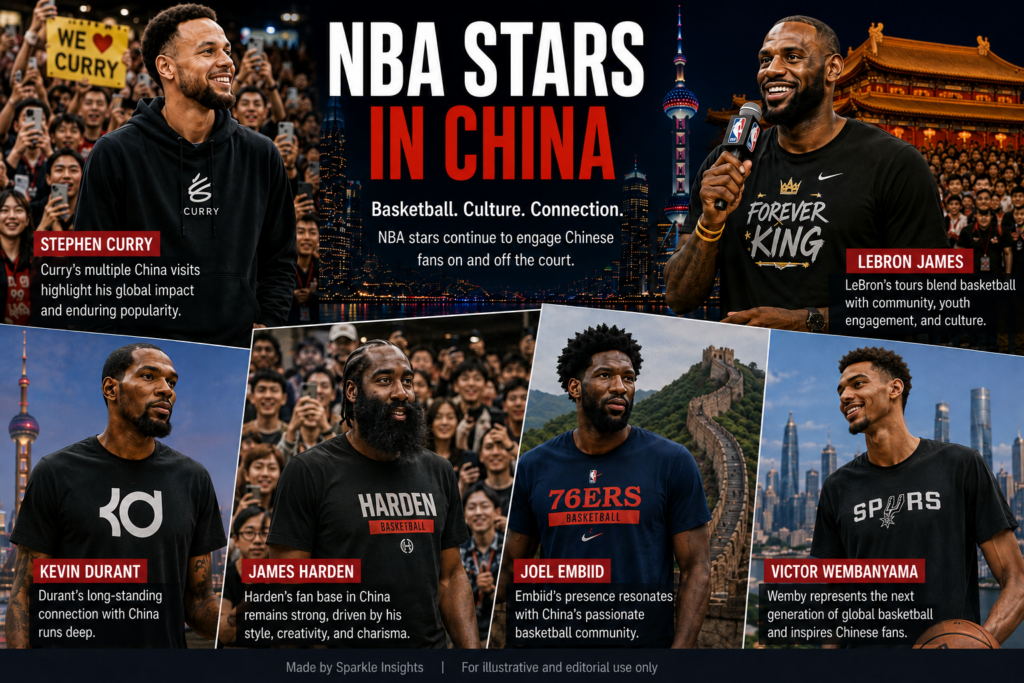
For the NBA, that moment pointed to something larger. The league’s strongest China-facing opportunities are not only commercial. They are cultural. In China, the NBA has built decades of fan investment through figures like Yao Ming, Kobe Bryant, Stephen Curry, James Harden, and now Wembanyama. Yet the league’s relationship with China has also been tested, especially after the 2019 Daryl Morey controversy. That history made the NBA’s 2025 return to China-facing preseason games in Macao symbolically important.
The question now is not simply how the NBA can “win back China.” The larger opportunity is to rebuild emotional access with Chinese fans and the Chinese diaspora in a more thoughtful, culturally specific way.
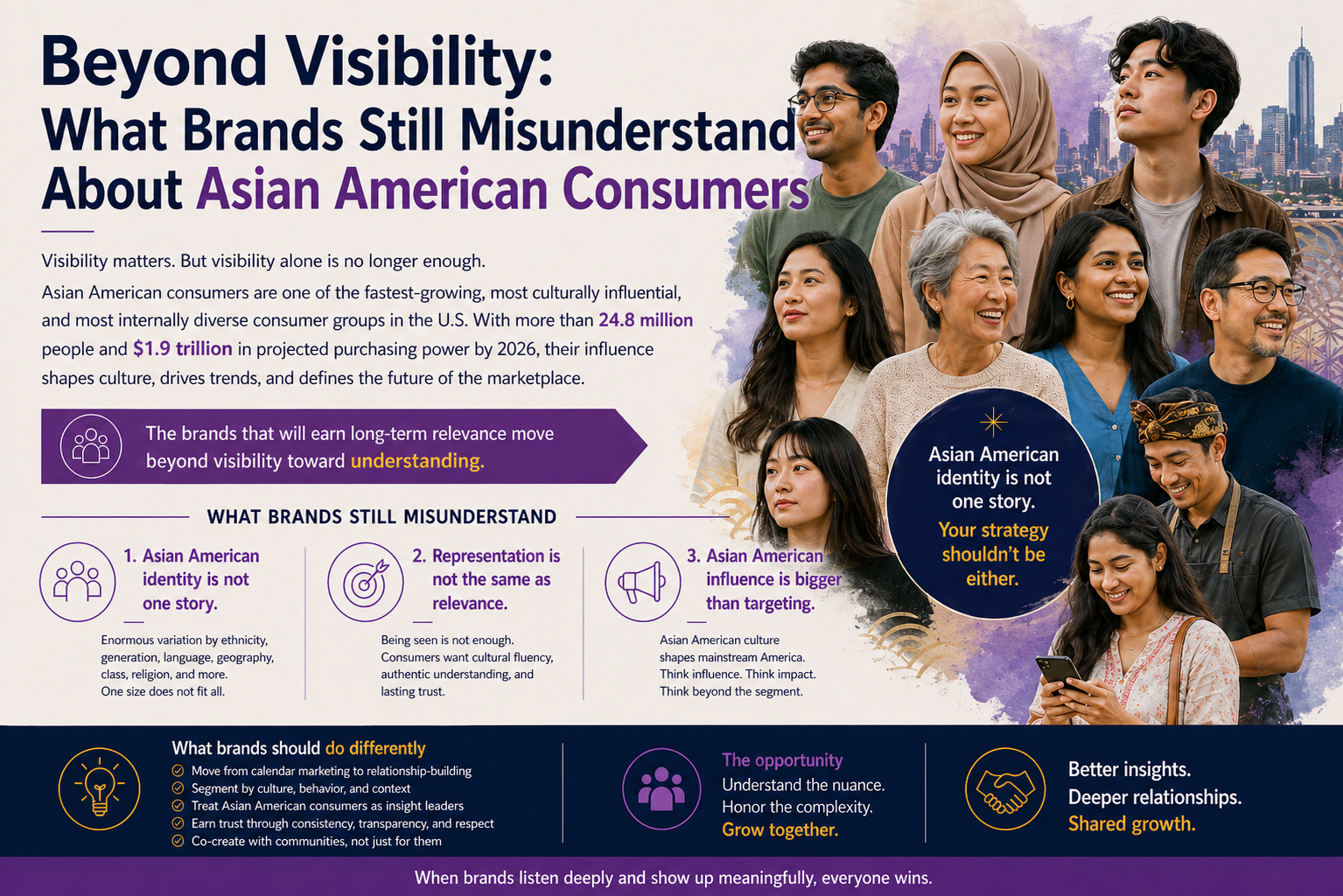
That means resisting the temptation to treat “Asian audiences” as one broad market. A China-based fan watching highlights on Tencent is not the same as a second-generation Chinese American fan in the Bay Area, a Chinese international student in Boston, or a bilingual family following the NBA across WeChat, YouTube, and family group chats. These audiences are connected, but they do not experience basketball in the same way.
The smarter path is slower and more intentional. Rather than trying to speak to every Asian community at once, the NBA and other brands should start with one community, one cultural context, or one local market. In this case, the Chinese fan ecosystem is a strong starting point because it spans China-based fans and Chinese diaspora communities in the United States.
A campaign rooted in Chinese American communities in San Francisco or New York could resonate with China-based fans if it reflects authentic Chinese cultural identity, family pride, youth basketball, sneakers, language, and cross-border media habits. At the same time, China-facing moments like Wembanyama’s Shaolin visit can create meaning for Chinese diaspora fans in the United States by reinforcing pride, visibility, and cultural recognition.
That is the real cross-over effect: not assuming all Asian audiences are the same, but recognizing how thoughtful work in one Chinese cultural context can travel into another. The work must begin with specificity. Its broader impact comes later, when the idea is strong enough and respectful enough to move across borders.
The NBA’s China Advantage Was Built on Emotional Access
The NBA’s success in China has never depended only on showing games on television. Distribution mattered, but emotional access mattered more.
Yao Ming was foundational because he became a symbolic bridge between two basketball cultures. His success made the NBA feel closer to Chinese fans while also making American audiences more aware of China’s basketball passion.
Since then, NBA stars have carried much of the league’s China-facing appeal. Kobe Bryant represented discipline and competitive mythology. Stephen Curry built appeal through skill, humility, and relatability. James Harden showed the power of repeated player-market connection when he reportedly sold 10,000 bottles of wine within seconds during a 2023 livestream in China.
These examples point to a larger truth: Chinese NBA fandom is often highly player-driven. Fans may support teams, but they also follow individual narratives — a player’s work ethic, charisma, style, sneaker line, training routine, or perceived respect for China. In that environment, a player visit can accomplish what a league campaign often cannot. It can make the relationship feel personal.
The Post-2019 Reset Requires Trust
The NBA’s return to China-facing live events in 2025 mattered because it followed a six-year gap. The 2025 NBA China Games in Macao featured two preseason matchups between the Nets and Suns, along with off-court fan experiences.
That history cannot be treated as a footnote. It showed how vulnerable global sports businesses can become when they sit at the intersection of commerce, national identity, political speech, and cultural respect.
The 2025 games in Macao were important, but durable relevance requires more than event marketing. If the NBA wants to strengthen trust with Chinese fans, it needs sustained cultural participation: youth basketball, coaching programs, women’s basketball, local creators, university tournaments, Chinese-language storytelling, and platform-native content. Chinese fans should not feel that the league only appears when there are tickets, sponsorships, or media rights to sell.
The Chinese Diaspora Is a Strategic Bridge
The China opportunity is not only “over there.” It also exists in San Francisco, Los Angeles, New York, Houston, Chicago, Seattle, and other communities where basketball intersects with identity, migration, family, and belonging.
The Chinese diaspora should not be treated as a shortcut to all Asian audiences. It is its own complex audience with different generations, languages, migration histories, political sensitivities, and media habits. A recent immigrant family, a second-generation Chinese American student, a Mandarin-speaking international student, and a Cantonese-speaking family in a long-established Chinatown community may all connect to the NBA differently.
That complexity is precisely why the Chinese diaspora matters strategically. Chinese diaspora communities often move between U.S. and Chinese digital ecosystems, between local identity and global Chinese culture, and between American sports culture and China-facing fan conversations. Influence does not move in only one direction.
Strong work in China can deepen relevance among Chinese diaspora fans in the United States by reinforcing pride, visibility, and cultural recognition. Strong engagement with Chinese diaspora communities in the United States can also travel back into China by signaling respect, authenticity, and long-term cultural investment.
Lunar New Year programming can still play a role, but it cannot be the entire strategy. Red-and-gold graphics, zodiac merchandise, lion dances, halftime performances, and limited-edition apparel can be meaningful when done thoughtfully. Without year-round investment, however, those efforts can become predictable.
The more important question is what Chinese and Chinese American basketball fandom looks like during the other 364 days of the year. The NBA does not need to invent that culture. It needs to recognize, research, and amplify the versions of it that already exist.
Precision Matters More Than Scale
The NBA’s next strategic move should be precision. Too many multicultural strategies flatten Asian audiences into one broad category. That approach may be convenient, but it is culturally weak.
A stronger strategy would begin with a focused audience and build from there. The league could start by understanding Chinese American fans in the Bay Area: how they follow the NBA, which players they trust, how family and language shape viewing behavior, what role sneakers and social media play, and what feels authentic versus performative.
The goal is not to build separate campaigns for every audience overnight. The smarter strategy is to build a learning system. Engage one community carefully. Listen to what works. Understand what does not. Then use those insights to guide the next effort.
If done well, the impact can move in both directions. A campaign rooted in Chinese American communities may resonate with fans in China, while China-based cultural moments may also strengthen emotional connection among diaspora communities in the United States. That resonance happens not because the audiences are identical, but because thoughtful cultural work often travels across borders.
For a global sports league, segmentation is not simply a marketing exercise. It is a trust-building tool, a risk-management tool, and a long-term growth strategy.
The Bigger Opportunity
For the NBA, the bigger opportunity is not simply China games, Chinese media rights, Lunar New Year jerseys, or celebrity appearances. It is understanding how Chinese fandom moves across borders in both directions — from Shanghai to San Francisco and from San Francisco back to Shanghai; from Tencent to YouTube and from YouTube back into Chinese fan conversations; from WeChat groups to arena activations and from U.S. diaspora communities back into China-facing cultural relevance.
China-based fan culture can shape how Chinese diaspora fans in the United States experience pride, visibility, and connection. At the same time, Chinese diaspora engagement in the United States can also influence how fans in China perceive the NBA’s authenticity, cultural fluency, and long-term commitment.
The lesson is not to lump Asian audiences together. The lesson is to engage one community deeply, understand the cultural links within that community, and allow strong work to create cross-over effects in both directions.
Wembanyama at Shaolin was compelling because it suggested something deeper than promotion. It suggested curiosity. For the NBA, that may be the real blueprint: show up with star power, but stay long enough to listen.
References
“The Chicago Bulls Celebrate Lunar New Year and the Year of the Snake.” NBA.com/Bulls, 4 Feb. 2025.
https://www.nba.com/bulls/news/the-chicago-bulls-celebrate-lunar-new-year-and-the-year-of-the-snake
“James Harden Sells Out 10K Bottles of Wine in Seconds on Chinese Livestream.” CBS News Philadelphia, 20 Aug. 2023.
https://www.cbsnews.com/philadelphia/news/nba-james-harden-wine-chinese-livestream/
Krogstad, Jens Manuel, and Carolyne Im. “Asians in the U.S.” Pew Research Center, 1 May 2025.
https://www.pewresearch.org/race-and-ethnicity/fact-sheet/asian-americans-in-the-u-s/
“NBA and Tencent Announce Five-Year Partnership Expansion.” NBA Communications, 29 July 2019.
https://pr.nba.com/nba-tencent-partnership-expansion/
“NBA China Games 2025: Everything to Know.” NBA.com, 9 Oct. 2025.
https://www.nba.com/news/nba-china-games-2025-everything-to-know
“NBA China Games 2025 Will Feature Brooklyn Nets and Phoenix Suns at The Venetian Arena in Macao.” Sands Resorts Macao, 20 Aug. 2025.
https://en.sandsresortsmacao.com/sands-lifestyle/press-release/2025-08-20/nba-china-games-2025.html
“NBA Returns to China after 6-Year Rift Triggered by Hong Kong Protests.” Financial Times, 2025.
https://www.ft.com/content/2e281a70-461b-4c77-a9be-a21b5ba44ebd
“NBA Tips Off 14th Chinese New Year Celebration.” China Daily, 17 Jan. 2025.
https://www.chinadaily.com.cn/a/202501/17/WS678a182ba310f1265a1db94a.html
“Spurs Star Victor Wembanyama Heads to a Shaolin Temple in China.” NBA.com, Associated Press, 10 June 2025.
https://www.nba.com/news/victor-wembanyama-visits-china
“Warriors Announce 2025 Lunar New Year Celebrations in Conjunction with NBA All-Star 2025.” Chase Center, 22 Jan. 2025.
https://chasecenter.com/news/warriors-nba-all-star-2025-lunar-new-year-celebrations-20250122/