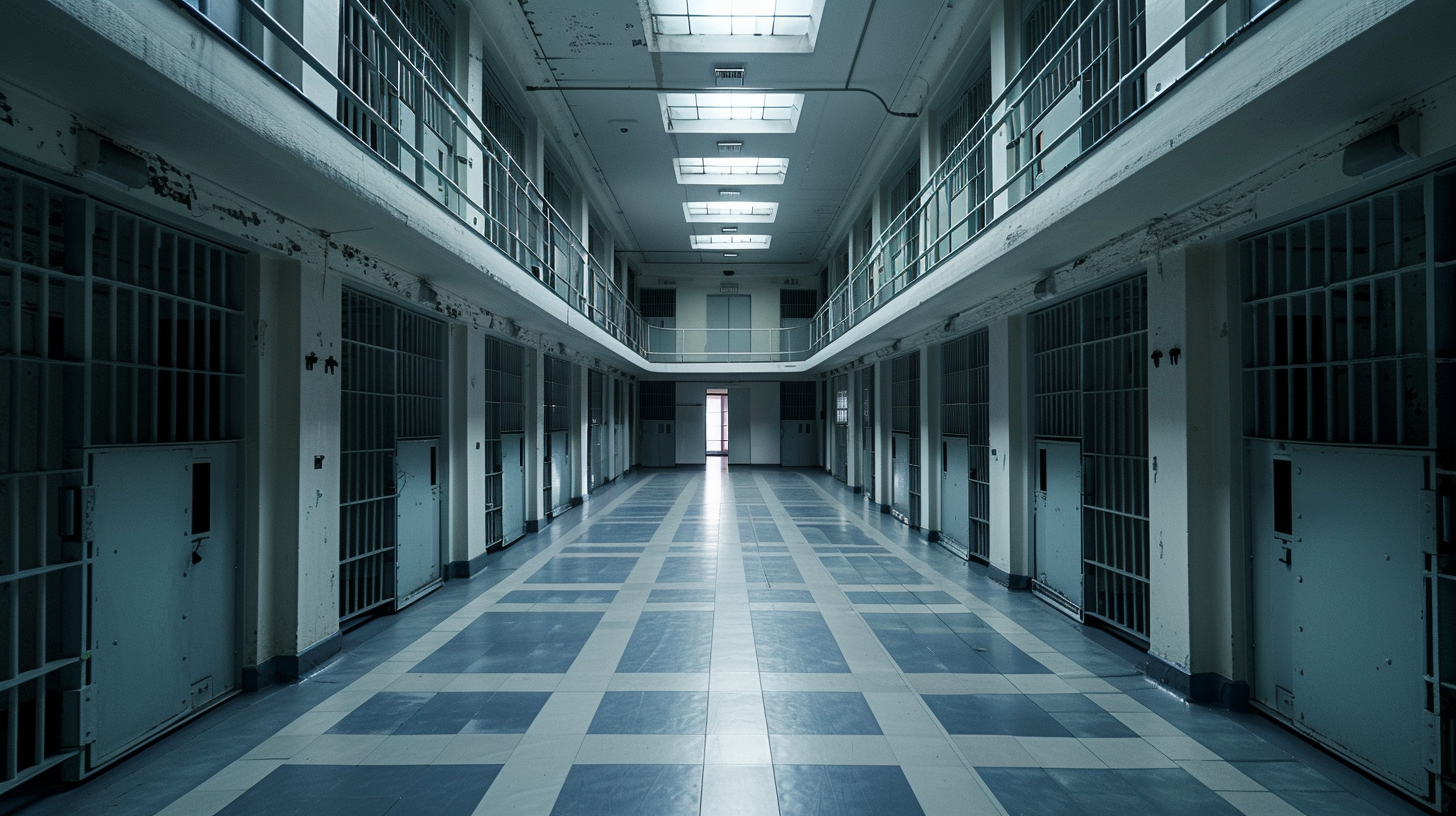
When most of us imagine prison life, our perceptions are shaped by movies, TV dramas, and headlines—scenes of violence, escapes, and hardened criminals. But those portrayals barely scratch the surface of a far more complex reality. Over the past three years, I’ve had the privilege of learning about this hidden world through my correspondence with Ray, whom I met through Adopt an Inmate. His candid reflections from inside the Texas prison system have become a cornerstone of my writing on Inner Spark Studio (www.innersparkkstudio.com), revealing the everyday experiences and evolving insights of a man navigating life behind bars.
This article, “Welcome to the Inside World: Understanding the Social Rules of Prison,” draws on Ray’s lived experience to peel back the stereotypes and illuminate the social structures, unwritten norms, and survival strategies that govern life inside. Far from being a monolithic environment defined solely by formal regulations, prison operates as a distinct social world with its own codes of conduct, power dynamics, and systems of trust and survival—a world where the unwritten often matters more than the official rules.
As Ray’s voice shows, understanding these social rules offers not just a deeper view into how individuals endure and adapt in carceral settings, but also a human story of resilience, identity, and transformation within a society most of us will never see firsthand.
The World Within a World
Flickering images of prison life—violent riots, dramatic escapes, and hardened criminals—often dominate our movie screens. While these portrayals contain elements of truth, they rarely capture the full, complex reality of life behind bars. As Ray E. Esparza, a man with a decade of lived experience in the Texas prison system, explains, “The movies can’t define the reality of prison. If you were to actually attach a camera to a prisoner, you would see the penitentiary on fire.”
Through Ray’s candid writings, we gain access to a hidden social world governed by its own intricate rules and unspoken etiquette. This article serves as an ethnographic introduction to the carceral social system, using Ray’s lived experience to illuminate the informal economies, power structures, and complex moral codes that govern life behind bars. Using his stories as our guide, we will explore the unspoken laws of trust, identity, and survival that shape every interaction in a world most of us will never see. This journey begins with the first and most fundamental rule of prison social life.
The First and Hardest Rule: Trust is a Liability
| Navigating Social Risk | |
| Red Flags | Why They’re a Danger |
| The one who immediately sends a note asking for money. | This person is testing your boundaries and sees you as an easy financial target. |
| The one who lies about everything and constantly exaggerates. | Their unreliability and dishonesty make them a dangerous and unpredictable associate. |
| The one who is friendly one day and hostile the next. | This erratic behavior signals instability and a willingness to turn on you without warning. |
| The one who asks for a small item (like coffee) while holding a full bag. | This is a test of your willingness to be taken advantage of, a sign of a manipulative personality. |
Upon his arrival at the Allred unit, a maximum-security prison, Ray recalls the wisdom of a fellow inmate, a simple yet profound law that underpins all social interaction: “Never trust no one, that’s law, my ‘G.’ Remember that!” This principle of radical self-reliance and suspicion is the first lesson for any new arrival. In an environment populated by “con artists, murderers, robbers, drug dealers, the works,” a person’s friendliness can easily be a mask for manipulation. Ray advises newcomers to be wary, as people will quickly “see that you are new and try to get over on you.” Recognizing these threats is a critical survival skill.
So, how does one find the rare “good guys” in such a treacherous landscape? According to Ray, it’s not about seeking out friendliness. Instead, it’s a matter of careful observation. The trustworthy individuals are those who “have a way of carrying themselves with respect and do business always on a level that’s good.” Trust, if it exists at all, is a form of social capital built on a foundation of honor and observable integrity, not on words or smiles. This foundational rule of distrust shapes an inmate’s every move, forcing them to quickly and carefully find their place within the prison’s rigid social hierarchy.
Finding Your Place: Identity, Politics, and Etiquette
In the carceral world, an individual’s identity is not a private matter; it is a public construct, immediately established and constantly policed. An inmate’s status and safety are determined by a composite of their reputation (nickname), their political allegiance (social or gang affiliation), and their demonstrated understanding of unspoken norms (etiquette). Survival depends on successfully navigating this complex social terrain where all three elements work together to define one’s place.
What’s in a Name? The Power of Nicknames
Almost everyone in prison has a nickname, and these names are rarely random; they are markers of reputation that carry stories. A girl gave Ray the nickname “Low Low” because of his thuggish, “lowrider” style of dress. One day, after not having seen him for a while, she spotted him and ran toward him, screaming “Low Low” at the top of her lungs, and the name stuck. In other cases, a name is imposed by the community to signify a specific role or character. Chris is one of the few who uses his real name, but others have nicknamed him “Crazy Chris” for his eccentric behavior. He once made a whistle from a pen top to blow at female officers and claimed to belong to a “dolphin clan” that saved him from drowning. Though Ray considers him “just a funny guy,” these actions solidified his reputation and his moniker, demonstrating how behavior shapes the very name you are called.
The Politics of Survival: Social Groups and Boundaries
Upon arrival, an inmate is immediately pressured to declare an affiliation. When Ray first entered the Allred unit, a guard’s first question was blunt: “You run with anybody?” This question underscores the reality that prison is a strictly segregated society with invisible but dangerous boundaries. Ray describes how different racial and social groups have their own designated territories for everyday activities.
“The Mexican people or certain gangs have this table; no one else sits there. The blacks also have a table… The phones are the same ordeal—one for the Mexicans, one for the black minority… if you just come and use the black’s phone and you’re Mexican, this can cause a fight, which can lead to a riot.”
Violating these boundaries has immediate and severe consequences. Ray recalls a fight that started between one Mexican man and one Crip but quickly escalated, putting “all the cages wired up.” The tension was palpable the next day, with all Black and Mexican groups on high alert. It’s a stark reminder of the high stakes of prison politics. As Ray concludes, “This is prison life, fam! Every day you see this.”
The Unspoken Code: Rituals of Interaction
Beyond group politics, daily life is governed by a subtle but critical code of conduct. These rituals of interaction are about maintaining respect in a crowded, high-tension environment, and violating them almost always leads to violence.
- Meal Time: You never reach over another person’s tray. To do so is a profound sign of disrespect that will provoke a fight.
- Restroom Use: In a shared space, there are strict rules for hygiene. Inmates are expected to kneel to urinate to avoid splashing the seat or floor. When defecating, they must flush repeatedly to minimize the smell. Failure to follow this etiquette is considered a violation of communal space and will result in a fight.
- Fighting: Defending oneself is non-negotiable. Failing to fight back is a sign of weakness that makes you a permanent target for bullies and thieves. As Ray puts it, “in prison, all you have to do is fight, win/lose, or draw, just defend yourself, FAM.” If you don’t, you will be labeled a coward and people will “take from you, bully you, whatever.”
This constant threat of expropriation makes economic independence not just a goal but a critical defense mechanism, forcing inmates to build their own systems of commerce from the ground up.
The Prison Lifeline: An Underground World of Communication and Commerce
Cut off from the outside world, inmates have created ingenious and robust systems to communicate, trade, and sustain themselves. This underground network operates entirely outside the official prison structure and is a critical lifeline for survival.
The Hustle: Where Skill Becomes Currency
For inmates without financial support from family, finding a “hustle” is not a choice—it’s a necessity. This informal economy is built on skill, talent, and trade, where an inmate’s abilities become their currency. Ray lists several common trades:
- Artistic Skills: Talented artists make pop-up cards for birthdays and holidays or draw portraits for fellow inmates. The value of this work can be significant; Ray once sold a color portrait of Kobe Bryant for $50.
- Technical Skills: Inmates with a knack for electronics can make a living fixing radios and headphones or even building their own speakers.
- Craftsmanship: Skilled hands can sew custom-tailored clothing like gym shorts and V-necks or create intricate rosaries and necklaces.
This economy allows inmates to acquire essential items and maintain a sense of purpose and self-reliance in an environment designed to strip them of both.
Running Line: The Inmate Postal Service
In solitary confinement, where physical interaction is impossible, “running line” is the primary method of communication and trade. It is an inmate-operated postal service, often compared to “fishing,” where a weighted line is thrown from one cell to another to pass notes, food, or other goods. As Ray explains, a line is an inmate’s only form of “transportation,” making it an indispensable tool for survival. This skill is so vital that inmates learn to “spin line and sell lines” as a trade. A well-made, high-quality braided line is preferred because it is strong, lasts longer, and doesn’t tangle; it can sell for “$4 to 5 dollars” worth of commissary goods.
The Human Element: Finding Connection in “Burning Hell”
Despite the system’s attempts to atomize individuals, inmates construct intricate networks of reciprocity and mutual aid, demonstrating a persistent humanity that defies the brutal logic of the institution. Ray describes prison as “burning hell”—a place of profound despair, loneliness, and mental anguish. Yet, even in this environment, acts of compassion, moments of humor, and complex relationships reveal that humanity can endure.
Ray himself exemplifies this spirit. When he receives items from the commissary, he makes a point to share with those who have nothing, sending soap, cookies, and pens to his friend Lil B and others. “I know some good people that ain’t got no one,” he explains. “Those same people, I bless, even when I’m on my last… I still give.” The social dynamics are also a study in contradictions. Ray describes the “cell warriors” who scream violent threats at each other every morning. One moment, they are mortal enemies; the next, one yells to the other, “Shoot me a soup, bitch!” This rapid shift from aggression to reciprocity leaves Ray marveling: “Wow, y’all were just at each other’s throats trying to kill each other, now you’re asking each other for a soup.” The relationship with authority is similarly complex. There are “cool guards” who are respectful and “let you do your time peacefully,” creating a stable environment. Then there are the adversarial “super cop” guards, who seem to have a “chip on their shoulder” and “do anything to piss you off,” often provoking confrontations that they inevitably win.
A World of Contradictions
Prison, as seen through the eyes of Ray E. Esparza, is far more than a place of punishment. It is a hidden social world with its own language, economy, and political systems—a society with an intricate code of conduct that one must learn to survive.
It is a world defined by extreme contradictions. It is a place of deep-seated distrust and sudden violence, where a misplaced word can have dire consequences. At the same time, it is a place of remarkable ingenuity, where inmates create thriving economies from scratch and devise brilliant methods to communicate across impenetrable barriers. It is an environment of profound loneliness that also fosters moments of generosity, humor, and unlikely friendship.
Perhaps the most powerful lesson from this inside world is about the resilience of the human spirit. Ray’s own journey, from a self-described “monster” to a man striving to be “a better man,” shows that even in “burning hell,” the capacity for reflection, change, and humanity remains.